
Ingredients
Shop By Collection
-
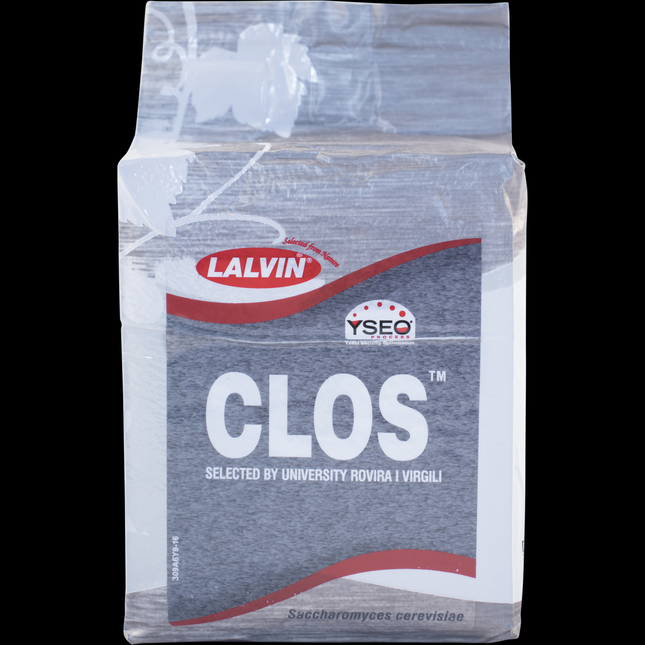
Clos Dry Wine Yeast
Clos is a yeast strain isolated from the Priorat region of Spain. Clos was chosen for its ability to re-enforce structure while emphasizing aromatic complexity and mouthfeel. Sweet red fruit (cherry), with pepper and chocolate notes are typical of what Clos brings to a fermentation. With hot climate/high Brix fruit, Clos is a great choice for its high alcohol tolerance (17%), low Nitrogen needs and short lag phase. Clos also does well with higher fermentation temperatures (max 95 F) and shows a good compatibility with MLF. Highly recommended for Syrah, Petite Syrah, Grenache, Tempranillo and Carignane. Download the PDF Download the PDF
$2.99
-
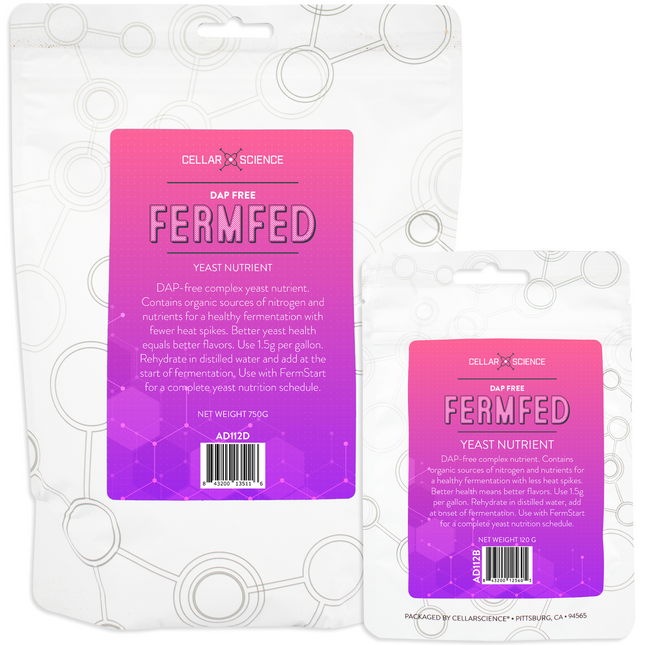
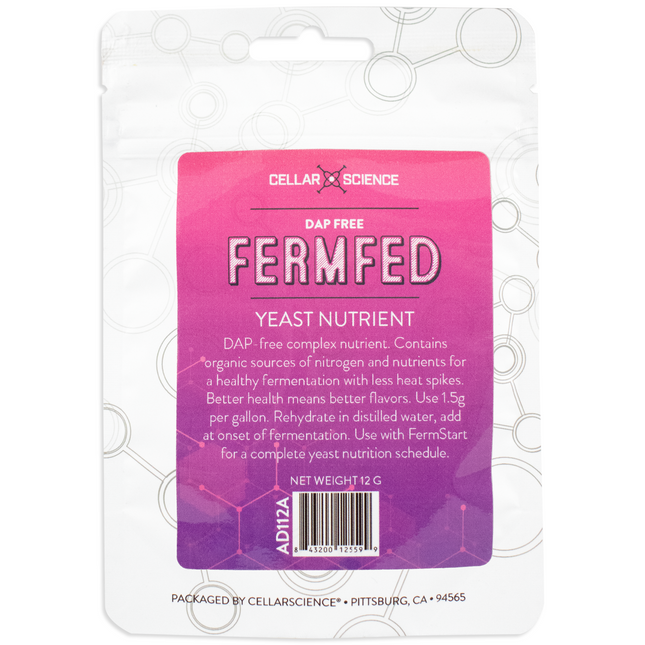
CellarScience® FermFed DAP Free | Yeast Nutrient
Feed your fermentation with FermFed DAP Free by CellarScience®. The 100% natural formulation of FermFed DAP Free is derived from the autolysis of very specific yeast strains naturally high in free amino acids, sterols, mannoproteins, zinc, magnesium, and niacin, along with vitamins B1, B2, B5, B6, and B12 for a complete yeast health regimen. As the name suggests, this unique formulation does not contain the traditional inorganic diammonium phosphate, but does provide organically derived nitrogen. How Much Do I Add and When? The recommendation that covers most fermentations is to add 1.5 gram per gallon of FermFed DAP Free at the onset of fermentation and then add 1 gram per gallon of FermFed after 1/3 sugar depletion. Mix the nutrients in a small slurry of water and add to the fermentation. Read more below if you are interested in measuring YAN (Yeast Available Nitrogen) and adjusting your nutrient schedule accordingly. The Science of How it Works The different components of FermFed DAP Free work in different ways to feed and protect your yeast. The complex and organic nitrogen in FermFed DAP Free helps eliminate excessive yeast growth in the initial phases, reducing fermentation heat spikes at the start of fermentation. Included sterols make the yeast membrane more resistant to alcohol and to high temperatures. The collection of B-vitamins along with zinc and magnesium are essential for enzymatic activity, alcohol tolerance, and yeast health. Mannoproteins help avoid the aromatic stripping during the fermentation by binding esters and terpenes and not allowing them to be driven off by CO2. The included yeast hull components act as receptors to bind up fatty acids that can accumulate and cause stuck fermentations. Advanced - Adjusting Your Nutrient Schedule Based on YAN (Yeast Available Nitrogen) In addition to the nutrients provided by FermFed or FermFed DAP Free, yeast need a certain level of nitrogen to perform adequately. If deprived of nitrogen, yeast are more likely to produce off flavors, most notably hydrogen sulfide. When added at the rate of 1 gram per gallon, FermFed provides 38ppm of YAN while FermFed DAP Free adds 20ppm when added at the rate of 1.5 gram per gallon. How much YAN do you need? Acceptable levels range from 175 to 300ppm. YAN levels in grapes vary, with grapes from warmer climates often having less. The best practice is to measure your grapes using a commercial wine lab or the Vinmetrica YAN Test Kit along with a Vinmetrica Meter. If you know your YAN the following is a good general guide: 175ppm or above = FermFed DAP Free @ onset + FermFed DAP Free @ 1/3 completion (adds 40ppm YAN) 150ppm or above = FermFed DAP Free @ onset + FermFed @ 1/3 completion (adds 58ppm YAN) 125ppm or above = FermFed @ onset + FermFed @ 1/3 completion (adds 72ppm YAN) Below 125ppm = FermFed @ onset + FermFed @ 1/3 completion + extra DAP For a full yeast nutritional plan, use FermStart when rehydrating your yeast, use FermFed DAP Free at the onset of fermentation, and use FermFed after 1/3 sugar depletion.
$2.49
-
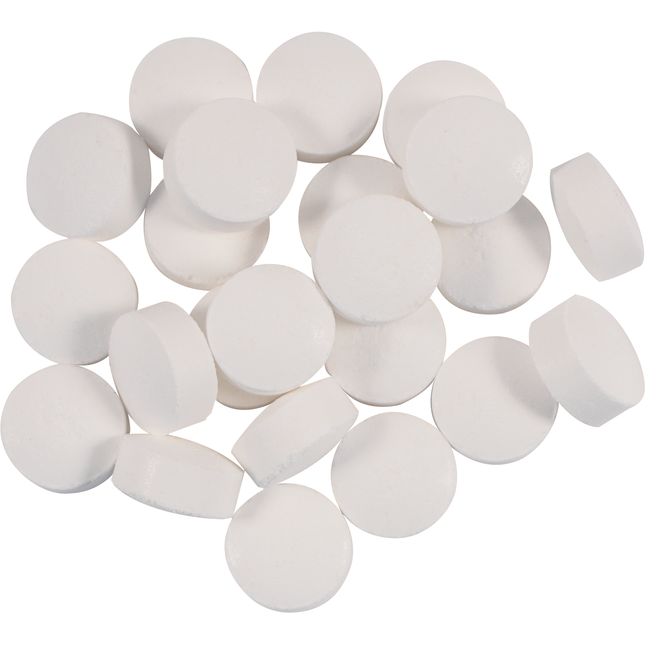
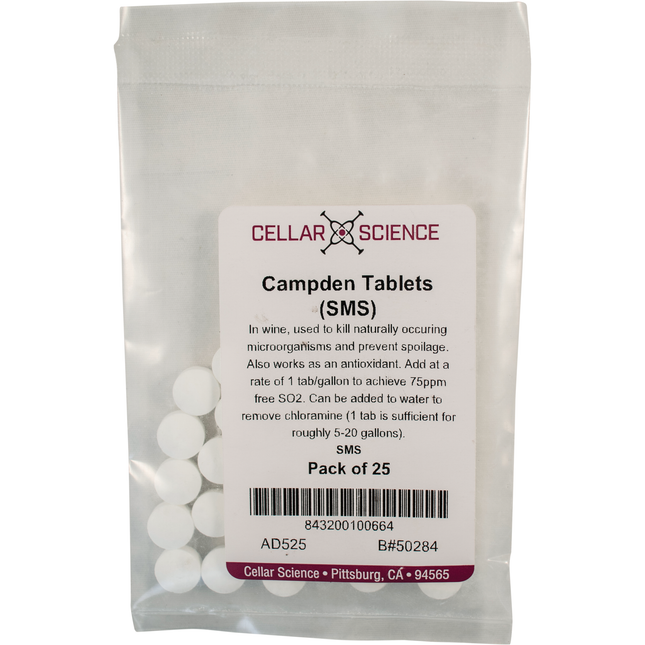
Campden Tablets - Sodium Metabisulphite (25 Tablets)
An essential ingredient in winemaking. Sodium Metabisulfite, (often referred to as SO2, sulfites meta, or meta-bi) has several uses in winemaking. It is used at the crush, to help control the spoilage bacteria and indigenous yeast that may already be present on the fruit or the equipment. The amount used is enough to stop most of the unwanted organisms but not enough to hinder a cultured yeast, which has a higher tolerance to sulfites. This effectively “wipes the slate clean” for the cultured yeast to step in and rapidly colonize the must. Sulfites also help to inhibit the enzymatic browning of musts and finished wines. During storage and in the bottle, sulfites at the proper levels will protect a wine by continuing to inhibit spoilage organisms, as well as by scavenging oxygen. Campden tablets are Sodium Metabisulfite in an easier to measure format. Adds 75 ppm of sulfites at the rate of one tablet per gallon. These must be fully ground-up prior to use. Potassium Meta-bi in powder form, AD495 or AD500, is much easier to use if you have a scale and does not add sodium to your wine. It is possible the sodium could contribute a very small salty flavor. Especially when making white wine it is preferable to add potassium over sodium since added potassium can later help with cold stabilization. For more information refer to our MoreManuals! on Red or White Winemaking or one of the winemaking books that we offer for a complete explanation on how to properly manage sulfites.
$1.99
-

Stavin Hungarian Oak Cubes | Medium Plus Toast
Medium Plus toast cubes manufactured by StaVin. Cubes have a longer contact time than traditional chips do, which make them better for long-term aging of wines and beers. Also, longer contact time means longer extraction of flavors (3-6 months), which leads to a more complex combination of flavors. Chips are usually done giving flavor after a week, there by contributing a harsh, flat oak flavor. Download the PDF
$4.69
-


Red Star | Premier Rouge (Pasteur Red) | Dry Wine Yeast
Red Star Pasteur Red has been rebranded as Premier Rouge but is the same exact yeast stratin. Known as a strong fermenter for producing full bodied reds, especially good with grapes from the Cabernet and Zinfandel families. Ferments from 60 to 80 degrees. Download the PDF
$1.79
-


WineStix - Medium Toast French Oak Carboy 2 Pack
WineStix are a new form of oak integration for wine, designed to give new barrel flavors with an extraction time similar to cubes. The combination of Short and Long grains result in amazing gradience of flavor similar to barrels, while extracting significantly quicker! These are Medium toast French Oak staves, and depending on the wine, will impart flavors of vanilla and coffee, while clearing out negative vegetal flavors and astringency from the wine. This is a two pack of WineStix, sized specifically for a 5-6 gallon carboy of wine. WineStix will easily fit through the mouth of a glass carboy, and can be attached to a string via the drilled hole for easy removal! One carboy Winestix will treat 5-6 gallons of wine.
$15.99
-

Tannin Riche Extra
This product replaces our TAN140 - Tannin Plus Enological tannins offer the winemaker the possibility to add refined, highly-bindable tannin to your wine at any stage during the process. Benefits can include increased structure and mouthfeel, color stabilization, stability, anti-oxidative qualities, and overall complexity. Tannins can reduce vegetal/herbaceous characteristics and perceived astringency. We offer four types of oenolgical tannins, two for use during fermentation, and two for use during the aging phase. Aging Tannins Tannin Riche Extra is a preparation of 100% American oak tannin that has been lightly toasted to impart a soft, aromatic character while enhancing the structure and organoleptic complexity of a wine. Tannin Riche Extra is a great tool for imparting hints of coconut, a heightened vanillin oak character and a smooth finish to your wines. Although designed for fine-tuning a wine, Tannin Riche Extra still maintains the regular properties associated with the use of tannins such as helping with clarification, stability, oxidation, and aging. Works well in conjunction with low doses of other tannins (i.e: Tannin Complex & FT Blanc Soft). To Use: Dissolve the tannin in 10 times its weight in warm water (95F/35C). Add to the wine during a punch-down or pump-over for good mixing. Addition of Tannin Plus should be made a minimum of three weeks before bottling. Recommended dosage: 0.2-0.4 g/gal A rough approximate of weight is 3/4 tsp = 1 gram. We highly recommend using a scale to weigh the product for an accurate dose. We do not recommend relying on these rough conversions for accurate dosage rates.
$4.99
-


CellarScience® FermFed | Yeast Nutrient
Help your yeast reach the end of fermentation safely while producing amazing flavors with FermFed by CellarScience®. Yeast that are given FermFed have a higher likelihood of fermenting without issue while producing wines with more intense flavors and aromas. FermFed is a complex nutrient blend of diammonium phosphate, thiamin, amino acids, sterols, pantothenic acid, mannoproteins, protective microelements derived from yeast hulls, and vitamins B2, B5, B6, & B12. FermFed also contains the organic and inorganic nitrogen (DAP) that yeast need. How Much Do I Add and When? The recommendation that covers most fermentations is to add 1 gram per gallon of FermFed DAP Free at the onset of fermentation and then add 1 gram per gallon of FermFed after 1/3 sugar depletion. Mix the nutrients in a small slurry of water and add to the fermentation. Read more below if you are interested in measuring YAN (Yeast Available Nitrogen) and adjusting your nutrient schedule accordingly. The Science of How it Works The different components of FermFed work in different ways to feed and protect your yeast. Grape must/juice is often deficient in assimilable nitrogen. When yeast do not have enough nitrogen, they are more likely to produce hydrogen sulfide (rotten eggs). FermFed helps to eliminate this problem by providing enough nitrogen for most situations. Yeast get weaker as they divide and multiply. They run the risk of not being able to properly finish fermentation as the alcohol content rises. Feeding them sterols help cells maintain membrane fluidity so that the yeast can properly function as alcohol and other harmful compounds in the fermentation conspire against them. Mannoprotein molecules bind esters and terpenes and work as an anchor to keep them in solution so they are not driven off by CO2 during fermentation. Pantothenic acid is added to help reduce the production of hydrogen sulfide. Thiamine is important for yeast metabolism. Vitamins B2, B5, B6, & B12 are important for general yeast health. Advanced - Adjusting Your Nutrient Schedule Based on YAN (Yeast Available Nitrogen) In addition to the nutrients provided by FermFed or FermFed DAP Free, yeast need a certain level of nitrogen to perform adequately. If deprived of nitrogen, yeast are more likely to produce off flavors, most notably hydrogen sulfide. When added at the rate of 1 gram per gallon, FermFed provides 38ppm of YAN while FermFed DAP Free adds 20ppm. How much YAN do you need? Acceptable levels range from 175 to 300ppm. YAN levels in grapes vary, with grapes from warmer climates often having less. The best practice is to measure your grapes using a commercial wine lab or the Vinmetrica YAN Test Kit along with a Vinmetrica Meter. If you know your YAN the following is a good general guide: 175ppm or above = FermFed DAP Free @ onset + FermFed DAP Free @ 1/3 completion (adds 40ppm YAN) 150ppm or above = FermFed DAP Free @ onset + FermFed @ 1/3 completion (adds 58ppm YAN) 125ppm or above = FermFed @ onset + FermFed @ 1/3 completion (adds 72ppm YAN) Below 125ppm = FermFed @ onset + FermFed @ 1/3 completion + extra DAP The best way for to test for YAN is using a lab or a home testing solution like this YAN kit from Vinmetrica. An acceptable level for YAN is between 200 to 350ppm FermFed provides 38ppm of Yan when added at the rate of 1 gram per gallon. The reason we don’t automatically use FermFed for a Stage 2 is that we don’t want to introduce excessive amounts of DAP into the wine if your yeast don’t need it. For a full yeast nutritional plan, use FermStart when rehydrating your yeast, use FermFed DAP Free at the onset of fermentation, and use FermFed after 1/3 sugar depletion.
$1.49
-

Lallemand Assmanshausen (AMH) | Dry Wine Yeast
Assmanshausen (AMH) is the ideal choice for winemakers seeking to produce elegant, terroir-driven red wines with aromatic complexity and structured tannins Whether perfecting a Pinot Noir, elevating the freshness of Gamay, or crafting a refined Burgundy-style blend, AMH consistently delivers elegance, balance, and nuanced flavor in every bottle Enhanced aromatics and structured tannins for elegant red wines Assmanshausen (AMH) is a specialty wine yeast strain prized for its ability to enhance aromatic complexity and develop structured tannins in cool-climate red wines. Originally selected from the Assmanshausen region in Germany, this strain is ideal for crafting elegant, age-worthy wines that benefit from extended fermentation and maceration periods. Its steady, controlled fermentation allows for nuanced expression of delicate fruit and spice characteristics. Enhanced Aromatics: Elevates subtle cherry, cranberry, and spice notes, ideal for cool-climate reds. Structured Tannin Development: Promotes refined tannin integration, enhancing mouthfeel and ageability. Alcohol Tolerance: Effective up to 14% ABV, suitable for balanced red wine styles. Temperature Range: Performs optimally between 59°F (15°C) and 82°F (28°C), allowing for slow, controlled fermentations. Low Flocculation: Extended suspension during fermentation aids in complex flavor development. Minimal SO₂ Production: Preserves clean aromatics and avoids off-flavors. Applications: Pinot Noir: Enhances delicate fruit and floral notes while promoting smooth tannin development. Gamay: Elevates fresh berry expressions and accentuates vibrant acidity. Cool-Climate Reds: Ideal for crafting structured, elegant wines that express terroir. Blended Reds: Perfect for Burgundy-style blends and Beaujolais Nouveau. Flavor Profile: Red Fruits: Highlights cherry, cranberry, and raspberry for a bright, aromatic profile. Spice and Floral Notes: Subtle expressions of clove, cinnamon, and violet enhance complexity. Silky Tannins: Promotes refined tannin structure for a smooth, elegant mouthfeel. Aging Potential: Supports graceful aging with layered complexity and aromatic depth. Guidelines: Rehydration: Rehydrate in 10 times its weight of chlorine-free water at 95°F (35°C) for 15–20 minutes. Stir gently to prevent clumping. Pitch Rate: Use 1–1.5 grams per gallon (0.25–0.4 grams per liter) for optimal fermentation and aromatic expression. Nutrient Addition: Supplement with yeast nutrients, particularly in low-nitrogen musts, to prevent sluggish fermentation. Fermentation Temperature: Maintain between 59°F and 82°F for optimal aromatic expression and structured tannin development. Extended Maceration: Suitable for long fermentations to develop depth and complexity. Download the PDF Download the PDF
$3.19
-

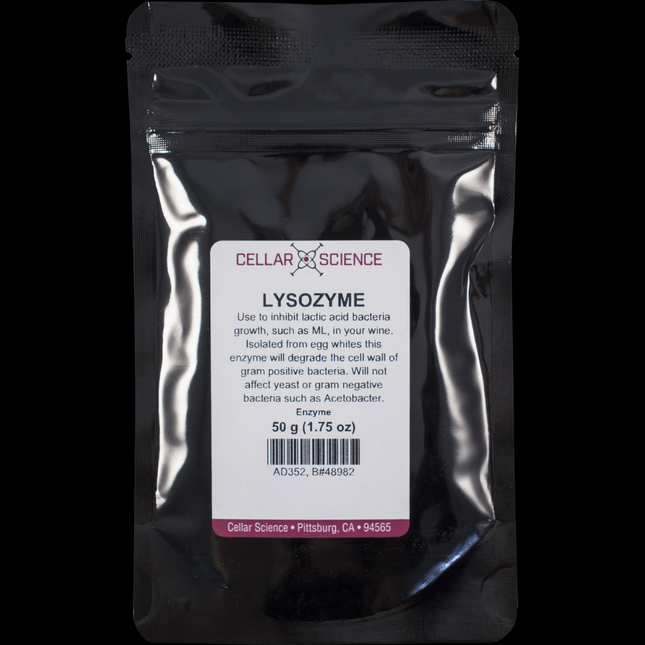
Delvozyme® (Lysozyme)
Wine Making Use Delvozyme (Lysozyme, Lysovin) for controlling lactic acid bacteria growth in your wine. Isolated from egg whites, this enzyme will degrade the cell wall of gram positive bacteria, but will not affect yeast or gram negative bacteria such as Acetobacter. Delvozyme can be used for both Red and White Wine Malo Fermentation. Dosage: To Delay Malolactic Fermentation: Red Wine - add to grapes at 100 - 200 ppm, or 0.38 - 0.76 grams per gallon. White Wine - Add to must at 200 - 300 ppm, or 0.76 - 1.14 grams per gallon. To Block Malolactic Fermentation: White Wine - Add to must or wine at 300 - 500 ppm, or 1.14 - 1.90 grams per gallon. Stabilizing wine after MLF is complete: Add to barrel during storage at 250 - 500 ppm, or 0.95 - 1.90 grams per gallon. When blending partial and complete MLF wines: Add immeditatley after blending at 300 - 500 ppm, or 1.14 - 1.90 grams per gallon, to reduce the risk of further malolactic fermentation (MLF). Within several days any lactic should expire. For sluggish or stuck yeast fermentation: Red Wine - Add at 150 - 400 ppm, or 0.57 - 1.52 grams per gallon. White Wine - add at 300 - 500 ppm, or 1.14 - 1.90 grams per gallon. Directions for use: You can make a 10% solution of Delvozyme in water (100 grams per liter of water). However we find the easiest method is to add the desired dry weight of Lysovin in 5x its weight of warm(tepid) water. Mix for one minute, allow this mixture to stand for 45 minutes and add to must, juice or wine while mixing well. Allow 24 - 48 hours for reaction to complete. **Note: 3tsp Delvozyme = 5g Beer Making Delvozyme can be used in beer making as well. Use either in the starter (recommended if you make starters) or when pitching (adding) the yeast to the wort, do not use over 140 F. Recommended dosages is 1 tsp per 5 gallons of wort. According to studies it has no effect on flavor or clarity. Storage: Should be stored at room temperatures in a dry environment, can be stored up to 5 years.
$34.99
-
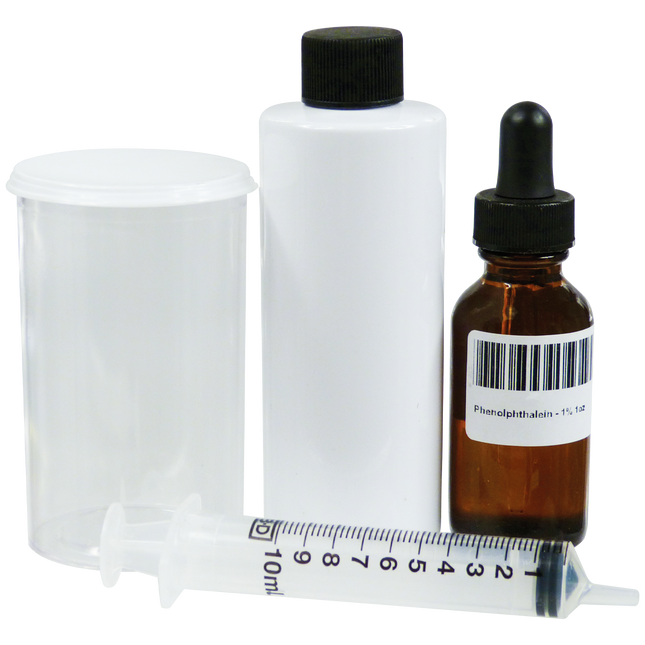
Acid Test Kit
Used to determine the Total Acidity in a wine, the Acid Test Kit is an invaluable tool for any home winemaker. Total Acidity measurements are important to winemaking because the correct amount of acidity is key to maintaining a wine which is balanced in flavor and stable for ageing. Kit Contents: Large Reaction Vial 10mL Syringe 4oz of Sodium Hydroxide Reagent Phenolphthalein Indicator in 1oz Dropper Jar Reagent Stability Information: Sodium Hydroxide Solution - 0.1 Normal (2 year shelf life cool & closed, 3 month shelf life cool and opened) Phenolphthalein Indicator - 1.0% (5 year + Shelf life)
$12.99
-

WineStix - Medium Plus Toast French Oak Carboy 2 Pack
WineStix are a new form of oak integration for wine, designed to give new barrel flavors with an extraction time similar to cubes. The combination of Short and Long grains result in amazing gradience of flavor similar to barrels, while extracting significantly quicker! These are Medium Plus toast French Oak staves, and depending on the wine, will impart roasted toasty aromas, with flavors of coffee and caramel sweetness the length of the palate. This is a two pack of WineStix, sized specifically for a 5-6 gallon carboy of wine. WineStix will easily fit through the mouth of a glass carboy, and can be attached to a string via the drilled hole for easy removal! 1" W x 8.5" Long One carboy Winestix will treat 5-6 gallons of wine.
$15.99
-


W15 Dry Wine Yeast
A fructophile for clean, low temperature ferments. W15 was isolated in 1991 from high quality Muller Thurgau must originating in the vineyards at the Viticulture Research Station in Wadenswil, Switzerland. W15 was developed to ferment dry whites at moderate speeds where bright fruit and heavy mouthfeel are desired. This yeast does just that, and it does so while respecting the varietal characteristics of the fruit. W15 can also be used to ferment high quality, fruit focused, light red wines from Pinot Noir and cool-climate Syrah. Short lag pahse, moderate rate fermenter at temperature ranges between 50 to 81 degrees F. Alcohol tolerant to 16%. W15 produces higher levels of glycerol and succinic acid especially at higher fermentation temperatures (above 77 degrees F). Download the PDF Download the PDF
$2.99
-

Xoakers - French Oak, Medium Plus
Xoakers are 1" Solid Oak spheres made from high quality French oak and seasoned for a minimum of 24 months. They will contribute a complex oak character while softening and rounding the wine as well. What sets these apart though, are their shape and ease of use. The uniform size allows for precise dosing, and easy removal once complete. Whether you are using carboys or neutral barrels, additions are as simple as counting out however many Xoakers you need, and tossing them in. Every vessel will be oaked to the same extent when using these, and no need to weigh them out! Removing them is as simple as turning over your carboy or barrel, and watching them roll out! These can be used in both red and white wines, and are perfect for carboys, barrels, small tanks, and kegs. Ideal oak for the home winemaker! These Convection Toasted Medium Plus French Oak Xoakers are packed in Mylar bags, and will contribute various flavors depending on the wine. The 8 pack will treat 4-8 gallons & 1 lb will treat 35-70 gallons. Dosage: 1-2 Xoakers / Gallon (3.78 L) wine (depends on desired Oak Impact) Contact Time: 4 Month Minimum Recommended Useful Life in Wine: 12 Months Size: 1" Diameter Spheres, 70 French Oak Xoakers / lb Liquid Displacement: .10 gal (.41 L) Toast Level: Med +
$9.49
-


Lalvin CY3079™ | Dry Wine Yeast
Lalvin CY3079 is the go-to choice for winemakers aiming to craft full-bodied, complex Chardonnay and barrel-aged whites with rich mouthfeel, creamy texture, and elegant oak integration Whether perfecting a Chardonnay or refining a white Burgundy, CY3079 ensures a smooth, layered finish with exceptional aromatic clarity Enhance complexity and mouthfeel in premium Chardonnay and barrel-aged whites Lalvin CY3079 is a specially selected wine yeast strain renowned for its ability to develop rich mouthfeel, enhanced complexity, and buttery characteristics during fermentation. Perfectly suited for Chardonnay and other barrel-aged white wines, CY3079 promotes the release of polysaccharides and encourages malolactic fermentation, resulting in wines with balanced acidity, smooth texture, and vibrant aromatics. Enhanced Mouthfeel: Promotes polysaccharide synthesis, delivering a creamy, full-bodied texture. Malolactic Compatibility: Optimized for seamless transition into malolactic fermentation, enhancing buttery and nutty notes. Aromatic Development: Elevates apple, pear, vanilla, and toasted almond aromatics. Alcohol Tolerance: Supports ABV levels up to 15%, allowing complete fermentation in high-sugar musts. Attenuation Rate: Typically achieves 85–90% attenuation, ensuring a dry, well-structured finish. Temperature Range: Performs optimally between 59°F (15°C) and 77°F (25°C), with the best expression of mouthfeel and complexity around 64°F (18°C). Medium Flocculation: Settles well post-fermentation, enhancing clarity and reducing sediment. Applications: Chardonnay: Ideal for barrel-fermented Chardonnay, bringing forward rich mouthfeel and buttery notes. White Burgundy: Elevates minerality and complexity, emphasizing ripe fruit and toasty oak integration. Viognier: Enhances stone fruit and floral notes, adding depth and roundness. Barrel-Aged Whites: Perfect for oaked Sauvignon Blanc and Semillon, adding creaminess and layered complexity. Flavor Profile: Stone Fruits & Citrus: Boosts expressions of apple, pear, and lemon zest. Buttery & Nutty Notes: Develops butter, vanilla, and toasted almond during malolactic fermentation. Rich Mouthfeel: Promotes a creamy, well-rounded palate with smooth, integrated texture. Oak Integration: Complements toasted oak, enhancing complexity and balance. Usage: Rehydration: Rehydrate in 10 times its weight of chlorine-free water at 95°F (35°C) for 15–20 minutes. Stir gently to avoid clumping. Pitch Rate: Use 1–1.5 grams per gallon (0.25–0.4 grams per liter) for optimal mouthfeel and flavor development. Nutrient Addition: Supplement with yeast nutrient to optimize fermentation and promote aromatic development. Fermentation Temperature: Maintain between 59°F (15°C) and 77°F (25°C), with 64°F (18°C) being ideal for creaminess and complexity. Barrel Fermentation: Ideal for in-barrel fermentations to enhance oak integration and complexity. Download the PDF Download the PDF
$2.99
-


58W3 Dry Wine Yeast
A yeast strain that really brings out aromatic components in white wines, especially Pinot Gris, Gewurztraminer, Riesling, Viognier and Semillion. Also a great choice for mead fermenations where it has a significant aroma/flavor input. Specifically Fruity/Floral aromas are emphasized through the natural liberation of terpenes found in these varieties. What we think is particularly unique about this strain is the creation of smoky/spicy aromas. Also selected as a commercial yeast strain for its ability to create mouthfeel volume and richness. So to recap - fruity/floral/smoky/spicy aromas and flavors with good mouthfeel... where do we sign up! Lallemand recommends adding Go-Ferm during rehydration and Fermaid K to the ferment to ensure that this strain ferments to dryness. Download the PDF Download the PDF
$3.19
-

American Medium Toast Oak Chips
Our high quality, yet inexpensive American oak chips. These are toasted to a Medium Toast.
$2.39
-


Lallzyme Cuvee Blanc | Fermentation Enzyme for White Wines
Lallzyme Cuvee Blanc – Enzyme for Aroma Release and Finesse in White and Sparkling Wines Enhances aroma expression by unlocking bound terpene and thiol precursors Improves clarification and filterability through efficient pectin breakdown Increases finesse and texture by gently releasing polysaccharides Ideal for varietal whites and sparkling base wines where delicacy is key Balanced glycosidase activity preserves freshness without compromising stability Lallzyme Cuvee Blanc is a highly specific enzyme developed by Lallemand for the production of elegant, aromatic white and sparkling wines. It offers a delicate balance of pectinase and glycosidase activity that breaks down grape cell walls to improve clarification while simultaneously releasing aroma precursors trapped in glycosidic form. This selective activity enhances varietal expression—especially in terpene- and thiol-rich varieties—without producing off-flavors or excessive bitterness. The result is a wine with lifted aromatics, better mouthfeel, and improved stability, ideal for styles requiring precision and finesse. Protocol Dilute Lallzyme Cuvee Blanc in 10 times its weight of chlorine-free water. Add to juice or wine at the preferred stage—either pre-fermentation for aroma release and settling, or post-fermentation for finishing and clarification. Ensure even distribution by mixing thoroughly. Optimal temperature range is 12–20°C. Avoid use below 10°C or in combination with bentonite or SO₂ during addition. Usage Rates Recommended dosage: 2–4 grams per hectoliter = 0.02–0.04 grams per liter = 0.076–0.151 grams per gallon Use 2 g/hL for lighter aromatics or wines already showing good varietal character. Increase to 4 g/hL in more neutral juices or when maximizing aromatic potential is desired. Allow adequate contact time—typically 24 to 48 hours—depending on the winemaking stage and style.
$2.99
-


Viniflora® Oenos™ 2.0 | Dry Malolactic Bacteria | 1.5 g
Oenos™ 2.0 is an ideal strain to achieve a fast, clean malolactic fermentation in barrel aged wines Goes well with most grape varieties, but is mainly used in Cabernet Sauvignon, Syrah, Merlot, Malbec, Pinot noir, Gamay, Nebbiolo, Carignan, Tempranillo and Chardonnay Direct inoculation, freeze-dried bacteria – does not require rehydration High numbers of active cells which ensure a quick start of fermentation Good for 66 gallons Viniflora® Oenos™ 2.0 is a Oenococcus oeni selected for faster malolactic fermentation. Viniflora® Oenos™ 2.0 was launched in 2014 as a new generation of Viniflora® Oenos™. Viniflora® Oenos™ 2.0 fits the same specifications as Viniflora® Oenos™. However, it was selected for even faster malolactic fermentation (figure 1). This means that when a winemaker desires a fast, efficient and reliable malolactic fermentation Viniflora® Oenos™ 2.0 should be the first choose. For more information about ML Bacteria, please see MoreWine!'s Guide to Malolactic Fermentation. Characteristics: The go-to malolactic bacteria for safety and speed in a broad variety of wine styles Produces a medium amount of diacetyl Goes well with most grape varieties, but is mainly used in Cabernet Sauvignon, Syrah, Merlot, Malbec, Pinot noir, Gamay, Nebbiolo, Carignan, Tempranillo and Chardonnay Can be used for early co-inoculation, late co-inoculation as well as sequential inoculation Key Features: Recommended for white and red wines Direct inoculation, freeze-dried bacteria – does not require rehydration High numbers of active cells which ensure a quick start of fermentation This strain is pH tolerant to 3.2, Total SO2 to 40 ppm, temperature 62 – 77°F and alcohol to 15% (v/v) Low level of volatile acidity Cinnamoyl Esterase Negative
$23.99
-
Polycacel
This product replaces our FIN73 - Polylact Polycacel can be used both curatively and preventatively against browning and pinking in white juice or in wine under long term storage conditions. Polycacel helps improve wine color and overall organoleptic properties. A is a blend of polyvinylpolypyrolidone (PVPP), soluble postassium casein and micropulverized cellulose. This specific blend allows for more complete action on phenolic compounds while avoiding over-stripping the wine. To Use: Slowly mix Polycacel in 20 times its weight in cold water (do not use juice or wine). Allow the mixture to stand for 2 hours. For enhanced homogenization, gradually add the Polycacel to the wine container while mixing. Dosages: To protect from oxidation, add to wine and mix thoroughly: 150-300 ppm To treat oxidized juice, add during cold settling: 300-700 ppm
$5.99
-


VRB Dry Wine Yeast
VRB is a Spanish isolate from the Rioja region that was selected for its ability to handle high-alcohol (up to 17%) fermentations while creating exceptional flavor complexity. VRB improves mid-palate mouthfeel, softens tannins, and enhances the varietal characteristics of the fruit with an emphases on dried plums, jammy fruit and hazelnuts. Shows a good compatibility with MLF. A moderate rate fermenter with medium nitrogen requirements. A great strain for Tempranillo, Barbera, Sangiovese and Zinfandel. Temperature range 58-80F. Download the PDF Download the PDF
$2.99
-

Malic Acid
Due to high demand, the 55 lb is currently out of stock. Be the first to receive your items by placing a pre-order today. We will automatically ship this to you when we receive more inventory. 3.4g per gallon adjusts acidity by +.1%. It will lower pH less than will tartaric acid. Malic acid is the acid found in apples and is therefore the best choice for adjusting ciders. Malic is less sour than tartaric acid and can also be used to make acid adjustments in Rieslings, Gewurztraminer, and Muscat varieties, though many winemakers still prefer to use tartaric acid in these situations. You would not want to add Malic acid to any wine that will undergo a malolactic fermentation. As a note: only half of the artificially added malic acid will convert to lactic acid during a malolactic fermentation. A rough approximate of weight is 1 tsp = 2.7 grams. We highly recommend using a scale to weigh the product for an accurate dose. We do not recommend relying on these rough conversions for accurate dosage rates.
$2.99
-

Wine Conditioner - 500mL
Wine Conditioner is a combination sugar/sorbate solution for adding to a fermented wine in order to give it some residual sweetness. The sorbate helps prevent fermentation of the sugar that you are adding. Solution is 76-78° Brix. Directions: Add to taste, usually up to 125ml (4 oz) per 23L (5 gal) of wine. Wine must be stabilized before adding sweetener.
$8.99
-


OCI French Oak Cubes | Medium Toast
Oak cubes approximately 1 cm square, made from seasoned French Oak and produced in the USA. Oak cubes take longer to impart their character to the wine than chips, but the flavor can be superior due to the higher volume of unexposed wood in the cube. Medium toast is our most popular level and provides good oak flavor and character. Recommended usage is 2 oz to 4 oz per 5 gallons of wine.
$6.99
-


R-2 Dry Wine Yeast
R2 was isolated in the Sauternes region of Bordeaux by Brian Croser of South Australia. In addition to enhancing esters and mouthfeel, it has excellent cold temperature properties and will ferment as low as 50 degrees F, making it ideal for Icewine production. However, if it does not get proper nutrients it can tend to produce VA and H2S. For this reason, hydration with GO-FERM and the addition of Fermaid K is definitely recommended to optimize its' potential. R2 helps produce intense, direct fruit style whites by liberation of fruity and floral fermentative aromas. R2 also helps to enhance the varietal chacter by an enzymatic release of bound aroma precursors. It is recommended for aromatic white varieties such as Sauvignon Blanc, Riesling, Gewurztraminer, Chenin Blanc, Vidal, and Seyval. It is classified as a Saccharomyces cerevisiae bayanus. Best results from 50 to 86 degrees F, with an alcohol tolerance to 16%. Download the PDF Download the PDF
$2.99
-


Lallemand UVAFERM 43® | Dry Wine Yeast
UVAFERM 43 is the yeast of choice for winemakers aiming to produce powerful, structured red wines with deep color and bold flavor Its resilience under challenging fermentation conditions ensures complete fermentation, making it an invaluable tool in both standard and difficult winemaking scenarios Enhance fermentation power and structure in bold red wines UVAFERM 43 is a robust wine yeast strain, selected for its exceptional ability to ferment under challenging conditions. Its fructophilic nature makes it particularly effective in high-sugar musts, ensuring complete fermentation even when fructose concentrations are elevated. This strain is ideal for crafting full-bodied red wines, offering enhanced color extraction, tannin structure, and aromatic intensity. High Alcohol Tolerance: Capable of fermenting up to 18% ABV, suitable for high-sugar musts. Temperature Resilience: Operates effectively between 55°F (13°C) and 95°F (35°C), accommodating a wide range of fermentation environments. Fructophilic Fermentation: Efficiently ferments musts with high fructose content, common in late-harvest or overripe grapes. Enhanced Color and Tannin Extraction: Promotes the extraction of anthocyanins and polyphenols, contributing to vibrant color and structured mouthfeel. Low Nutrient Requirements: Performs well with minimal nitrogen supplementation, reducing the risk of sluggish fermentation. Applications: Full-Bodied Red Wines: Optimal for varietals like Cabernet Sauvignon, Syrah, Zinfandel, and Malbec, enhancing body and color stability. Fortified Wines: Suitable for Port-style and Amarone-style wines, supporting high alcohol levels. Warm Climate Fermentations: Excels in hot climates where fermentation temperatures are elevated. Stuck Fermentation Recovery: Effective in restarting difficult or stuck fermentations due to its high heat and alcohol tolerance. Flavor Profile: Dark Fruit Intensity: Emphasizes bold notes of blackberry, black cherry, and plum. Spice and Earthiness: Introduces subtle layers of black pepper, cocoa, and leather for added complexity. Smooth Tannin Structure: Develops well-rounded tannins, contributing to a balanced mouthfeel. Deep Color Stability: Supports anthocyanin preservation, resulting in rich, vibrant hues. Usage: Rehydration: Rehydrate in 10 times its weight of chlorine-free water at 104°F (40°C) for 15–20 minutes. Stir gently to avoid clumping. Pitch Rate: Use 1–1.5 grams per gallon (0.25–0.4 grams per liter) for optimal fermentation and color development. Nutrient Addition: Supplement with yeast nutrient to optimize fermentation strength, especially in high-Brix musts. Fermentation Temperature: Maintain between 55°F and 95°F to maximize aromatic expression and color stability. Extended Maceration: Suitable for long maceration periods to deepen color and enhance tannin structure. Download the PDF Download the PDF
$2.99
-

CellarScience® Silicone Bung | Solid | Large Barrel
CellarScience's solid silicone bung will provide a tight fit and secure seal to your oak barrel or variable volume tank lid. Made from pliable silicone for a great seal and is easy to clean and sanitize. Tapered design ensures it will fit most oak barrels as well as the hole in most variable volume lids. Top measures 2.5" including flange, 2.25" excluding flange. Tapers to 1.75" diameter at bottom.
$7.69
-

Red Star | Premier Classique | Dry Wine Yeast
Another good all purpose wine yeast used to give complex aromas and flavors, but it really does require proper nutrients to avoid sulfur problems. Especially suited to Chardonnays. Alcohol tolerant to 14%. Ferments from 60 to 80 degrees. Formerly known as "Montrachet". Download the PDF
$1.79
-

WineStix Carboy Sticks - American Oak Medium Plus Toast (2 Pack)
WineStix are a new form of oak integration for wine, designed to give new barrel flavors with an extraction time similar to cubes. The combination of Short and Long grains result in amazing gradience of flavor similar to barrels, while extracting significantly quicker! These are Medium Plus toast North American Oak staves, and depending on the wine, will impart flavors of roasted coffee, spice, nutmeg, honey, light chocolate, and hints of leather. This is a two pack of WineStix, sized specifically for a 5-6 gallon carboy of wine. WineStix will easily fit through the mouth of a glass carboy, and can be attached to a string via the drilled hole for easy removal! 1" W x 8.5" Long One carboy Winestix will treat 5-6 gallons of wine.
$13.99
-

OCI American Oak Cubes | Medium Toast
Oak cubes approximately 1 cm square, made from seasoned American Oak and produced in the USA. Oak cubes take longer to impart their character to the wine than chips, but the flavor can be superior due to the higher volume of unexposed wood in the cube. Medium toast is our most popular level and provides good oak flavor and character. Recommended usage is 2 oz to 4 oz per 5 gallons of wine.
$6.49
-

Yeast Hulls | For Stuck or Sluggish Ferments
Yeast Hulls are ususally the first action when you have a stuck or sluggish alcoholic or malolactic fermentation. Yeast Hulls are essentially dead yeast cells that absorb auto toxic yeast by-products that could be inhibiting your active yeast or ML culture from doing their job - finishing your fermentation! Yeast Hulls are then typically followed by Pro-Desert in the case of a stuck alcoholic fermentation or Acti Ml in the case of a stuck ML ferment. As a side note, Yeast Hulls are included in the Fermaid K mix of nutrients to help prevent problem ferments from the onset. The reason you would not use Fermaid K for most stuck ferments is that Fermaid K contains DAP. If DAP (Diammonium Phosphate) is added to the ferment past the point of metabolization by the yeast it could potentially leave an unwanted, residual flavor. Use at the rate of .5 to .9 grams per gallon. If stored in a cool, dry place, will last up to 3 years. A rough approximate of weight is 1 tsp = 2 grams. We highly recommend using a scale to weigh the product for an accurate dose. We do not recommend relying on these rough conversions for accurate dosage rates.
$1.69
-


VL3 Dry Wine Yeast
VL3 is a Bordeaux isolate that was selected following in-depth research identifying the molecules responsible for Sauvignon Blanc aroma. VL3 was found to enhance Sauvignon Blanc varietal characters and aromas (Mercaptopentanone, Mercaptohexanol, etc.) Subsequent experimentation has found this to be true of other white varietals such as Riesling, Pinot Gris, and Pinot Blanc as well. VL3 is well suited to aging on the lees and produces very low levels of VA and SO2. A premier yeast for Sauvignon Blanc fermentation worldwide. It is important to note that many of the sought after compounds that are enhanced by VL3 are actually sulfur based, so the use of oxygen and or Cu (copper) will effectively diminish or even remove them from the final wine if used in excess. Therefore, the use of nutrients is strongly recommended to avoid any H2S problems that would require oxygen or Cu to counteract. Best results from 60 to 68 degrees F, with an alcohol tolerance to 14%. Download the PDF Download the PDF
$3.49
-


CellarScience® PURPLE Dry Wine Yeast | Premium Wine Yeast
Big mouthfeel from high glycerol /polysaccharide /mannoproteins Flavors of Cherries, Raspberries, Figs, Jam, Red currant High alcohol tolerence Low nutrient needs Perfect for Syrah, Zinfandel, Pinot, Merlot, Malbec, Sangiovese, Grenache Our go-to choice for those reds originating from the Cote du Rhone in France such as Syrah, Grenache, and Mouvedre. Also a top choice for Zinfandel, Sangiovese, Malbec, Merlot, and Pinot. Induces flavors of ripe cherries, raspberries, red curant, figs and jam. Due to its production of glycerol and release of mannoproteins it produces full bodied, rich red wines. PURPLE has a very low production of SO2 which is favorable for an easy malolactic fermentation (MLF) post fermentation. PURPLE is also an easy to ferment yeast with a low nutrient needs which is the opposite of our Big Red strain. It also has a "killer" quality and naturally inhibits unwanted bacterial or wild yeast growth during fermentation. Start Time: Slower Alcohol tolerance: 15% Nitrogen demand: low Production of volatile acidity: Low Production of SO2: Low Ease to Ferment with MLF: Average YAN Requirement @ 23 Brix: 200 ppm Malic Acid Consumption: Low Yeast Type: Cerevisiae Optimal Fermentation Temp: 65–85°F Proper yeast hydration helps ensure a healthy fermentation. For every gram of yeast, mix .25 g of FermStart yeast nutrient with 25 ml of sterilized tap water between 104–106°F/40–41°C. When water reaches 104°F/40°C, sprinkle yeast into water and stir gently. Allow the slurry to stand undisturbed for 15 minutes and then stir again. For every gram of yeast used add 25 ml of clean must to the yeast slurry and let stand 15–20 minutes. If necessary, use additional must to adjust yeast slurry to within 18°F of must temp before pitching. For a complete nutrient schedule sufficient for most fermentations, add 1.5 g of FermFed DAP Free per gallon of must at the first sign of fermentation and 1 g of FermFed per gallon of must after 1/3 sugar depletion. Download the PDF
$1.99
-


RHST Dry Wine Yeast
R-HST was selected for its exceptional oenological properties in Riesling from trials conducted 1991 to 1996 in the Heiligenstein region of Austria. R-HST has a short lag phase and generation time, even at cold temperatures. These features allow it to dominate and persist over spoilage yeast such as Kloeckera apiculata, where other Saccharomyces cerevisiae might have difficulty. A relatively neutral strain, R-HST retains fresh varietal character while contributing body and mouthfeel. R-HST produces crisp, premium white wines intended for aging. R-HST is best used when the most transparency between a fruit and a finished wine is sought. This can be useful for showcasing quality fruit and terroir differences, as well making sure original fruit characters are retained in a final blend. Best results from 50 to 86 degrees F, with an alcohol tolerance to 15%. Download the PDF Download the PDF
$2.99
-


RBS 133 Dry Wine Yeast
An interesting yeast which can reduce the sensation of acidity and astringency in red wines from difficult conditions such as high acidity. Delicate fruit-forward aromas of cherry, blackberry, plum, and ripe fruits will be present in wines fermented using this yeast. Floral characteristics such as wild violet, as well as spice and vanilla have also been noted. This yeast is perfect for Sangiovese, hybrids, roses, and other light reds. The RBS strain will work well in conjunction with malolactic fermentation. Best fermentation results within 61-82°F. This is a moderate fermenter with medium nutrient requirements, capable of withstanding alcohol content up to 16%. Download the PDF Download the PDF
$2.99
-


WineStix - Light Toast French Oak Carboy 2 Pack
WineStix are a new form of oak integration for wine, designed to give new barrel flavors with an extraction time similar to cubes. The combination of Short and Long grains result in amazing gradience of flavor similar to barrels, while extracting significantly quicker! These are Light toast French Oak staves, and depending on the wine, will impart flavors of gentle spices, cloves, cinnamon, vanilla, along with some rounding and structuring of the wine. This is a two pack of WineStix, sized specifically for a 5-6 gallon carboy of wine. WineStix will easily fit through the mouth of a glass carboy, and can be attached to a string via the drilled hole for easy removal! One carboy Winestix will treat 5-6 gallons of wine.
$15.99
-

Calcium Carbonate
Calcium carbonate is used to reduce the acidity of wine. It does not require cold-stabilization to force complete precipitation, as does potassium carbonate. However, calcium carbonate is more likely to affect the flavor than potassium carbonate, and may take a few months to fully precipitate. One-quarter ounce (about 4 teaspoons) of calcium carbonate reduces acidity in one gallon by about 0.25%. Foaming may occur because of the production of CO2. Do not use more than one ounce per gallon. Wait 24 hours and rack wine. Calcium carbonate is also used in beer to increase the temporary hardness of water. Traditionally used in English stouts, pale ales and bitters. Usage: Usage varies with acid level Common name: Chalk
$1.69
-


Scottzyme Pec5L | Pectinase | Add to Must or Juice | Increases Yield
Scottzyme PEC5L – Pectinase Enzyme for Enhanced Settling and Juice Yield Rapidly breaks down soluble pectins for faster settling and improved clarity Increases free-run and press yield by reducing viscosity and cell wall resistance Improves flotation efficiency and tightens lees compaction Effective across a wide pH range and performs well at low temperatures Ideal for white, rosé, and fruit wines requiring fast clarification and clean separation Scottzyme PEC5L is a highly active liquid pectinase enzyme formulated to reduce pectin-related haze and increase processing efficiency in juice production. By breaking down soluble pectins, PEC5L dramatically improves juice release during pressing, reduces must viscosity, and accelerates settling or flotation. The result is clearer juice, more compact lees, and higher overall yield. Its formulation is optimized for cool-temperature performance and a broad pH range, making it a versatile tool in grape and non-grape juice clarification. Unlike general pectinases, PEC5L is designed to act quickly and cleanly, without over-extraction of phenolics or bitterness. Protocol Dilute Scottzyme PEC5L in 10 times its volume of chlorine-free water or juice. Add to must or juice immediately after crushing or during transfer to settling tank. Mix well to ensure even distribution. For flotation, add just before or during the flotation process. Avoid adding at the same time as SO₂ or bentonite. Usage Rates Recommended dosage: 1.5–4.0 mL per 1000 lb of fruit or 0.075–0.2 mL per gallon of juice = approximately 0.02–0.05 mL per liter Use lower rates for clean, low-pectin fruit or warmer temperatures. Use higher rates for pectin-rich grapes, low temperatures, or difficult-to-settle musts. Allow contact time of 2 to 12 hours depending on conditions and desired level of clarification.
$14.99
-
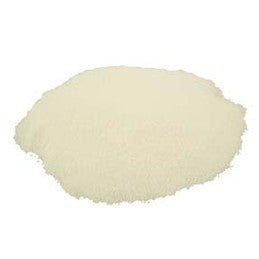
Polyclar VT (PVPP)
A non-soluble clarifier that removes both haze causing polyphenols as well as yeast cells. Mix 2 Tbls (or 5 g) with one cup of sanitized warm water and gently stir into five gallons beer. Let stand for a few days and rack off. Polyclar VT is a coarser grade of PVPP (140 micron particle size), optimized for addition to vessels, where faster settling is required. The larger particle size also facilitates settling of the stabilizer, allowing the majority of the product to be left behind with the lees at racking. A typical contact time of between 3 to 10 days is required, although there are no adverse effects from leaving Polyclar in contact with the wine for longer periods. For wine use .5 to 2.5 grams per gallon depending upon severity of problem and desired affect. A rough approximate of weight is 1 tsp = 1.1 grams. We highly recommend using a scale to weigh the product for an accurate dose. We do not recommend relying on these rough conversions for accurate dosage rates.
$5.99
-


CellarScience® BIG RED Dry Wine Yeast | Premium Wine Yeast
Recomended for aged red wines High color extraction Significant polysaccaride and glycerol production for huge mouthfeel High alcohol tolerence High nutrient need Top choice for Bordeaux varietals Cabernet, Cab Franc, Petite Verdot and Merlot Also excelletnt for Sangiovese, Nebbiolo and some Pinot The name kind of says it all. BIG RED is ideal for producing big, complex red wines with lasting fruit. Depending on the grape varietal used it can emphasize complex berry fruit and spice flavors. This strain is very efficient at breaking down and extracting tannins and anthocyanins from grape skin walls, making wines with dark inky color and a tannin profile suitable for extended aging. BIG RED also produces a great mouthfeel due to the significant production of polysaccharides and glycerol. It is also tolerant to higher alcohol levels making it ideal for those grapes that need to stay on the vine just a little longer to get full phenolic ripes with smooth tannin profiles. So lets recap... emphasizes berry fruit with many varietals, produces dark color, extracts a full array of tannins suitable for extended aging, makes wines with great mouthfeel, and is resistant to higher alcohols. Is there a catch? No, but to get all that done BIG RED does love nutrients and you will need to feed it and pay attention to it during fermenation. This is a strain where you would ideally know your Free Available Nitrogen levels that you could base a nutrient schedule around. Absent those numbers or a history with the grapes you are fermentiing, we would suggest you start with hydrating with Fermstart, feeding with FermFed DAP free at the onset of fermentation and feeding again with regular Fermfed after 1/3 sugar depletion. BIG RED is a very low producer of H2S when nutrient demands are met. The perfect strain if you want to make amazing reds. Not the perfect strain if you have a vacation planned during the middle of fermentation and are going to ask your neighbor to punch down...we hear it all!. Because this strain respects varietal character it can be used for a broad spectrum of red grape varietals. Perfect of courese for those Bordeaux varietals ilke Cabernet Sauvignon, Cabernet Franc, Petit Verdot and even Merlot. Also our first choice for Nebbiolo and some bigger style Sangiovese and Pinot Noir. Start Time: Fast Alcohol tolerance: 16%+ Nitrogen demand: high Yan Requirement @ 23 Brix: 270ppm Production of volatile acidity: Low Production of SO2: Low Ease to Ferment with MLF: Average Yeast type: Cervisiae Killer Factor: Neutral Malic Acid Consumption: Average Optimal Fermentation Temp: 65–85°F Proper yeast hydration helps ensure a healthy fermentation. For every gram of yeast, mix .25 g of FermStart yeast nutrient with 25 ml of sterilized tap water between 104–106°F/40–41°C. When water reaches 104°F/40°C, sprinkle yeast into water and stir gently. Allow the slurry to stand undisturbed for 15 minutes and then stir again. For every gram of yeast used add 25 ml of clean must to the yeast slurry and let stand 15–20 minutes. If necessary, use additional must to adjust yeast slurry to within 18°F of must temp before pitching. For a complete nutrient schedule sufficient for most fermentations, add 1.5 g of FermFed DAP Free per gallon of must at the first sign of fermentation and 1 g of FermFed per gallon of must after 1/3 sugar depletion. Download the PDF
$1.99
-


CellarScience® RED Dry Wine Yeast | Premium Wine Yeast
Emphasizes red berry fruit flavors High color extraction Makes wines that do not require extended aging Med-High nutrient need Top choice for Zinfandel, Sangiovese, Pinot, Merlot Our most popular red yeast is a perfect choice for Pinot Noir, Zinfandel, Sangiovese, Merlot and other reds where you want to emphasize red fruit flavors. When compared with BIG RED or PURPLE, RED is less about structure and body and more about fruit. Fantastic by itself if you plan to blend separately fermented lots back together. RED is a great choice to contribute red berry flavor. Also known to help produce intense color. Also a great choice for Cabernet, Syrah and other traditinoal big red varietals where you would like to emphasize fruit over structure and body. Because RED ferments cleaner than most yeast at high temperatures, it is the perfect choice if you are fermenting in a warm environment and do not have temperature control. It does not produce much SO2 so it is a great choice for easier ML fermentations Start Time: Average Alcohol tolerance: 16% Nitrogen Demand: Med Yan Requirement @ 23 Brix: 250ppm Production of volatile acidity: low Production of SO2: Low Ease to Ferment with MLF: Good Yeast Type: Cerevisiae Killer Factor: Neutral Malic Acid Consumption: Average Optimal Fermentation Temp: 65–85°F Proper yeast hydration helps ensure a healthy fermentation. For every gram of yeast, mix .25 g of FermStart yeast nutrient with 25 ml of sterilized tap water between 104–106°F/40–41°C. When water reaches 104°F/40°C, sprinkle yeast into water and stir gently. Allow the slurry to stand undisturbed for 15 minutes and then stir again. For every gram of yeast used add 25 ml of clean must to the yeast slurry and let stand 15–20 minutes. If necessary, use additional must to adjust yeast slurry to within 18°F of must temp before pitching. For a complete nutrient schedule sufficient for most fermentations, add 1.5 g of FermFed DAP Free per gallon of must at the first sign of fermentation and 1 g of FermFed per gallon of must after 1/3 sugar depletion. Download the PDF
$1.79
-


WineStix - Medium Toast American Oak Carboy 2 Pack
WineStix are a new form of oak integration for wine, designed to give new barrel flavors with an extraction time similar to cubes. The combination of Short and Long grains result in amazing gradience of flavor similar to barrels, while extracting significantly quicker! These are Medium toast North American Oak staves, and depending on the wine, will impart flavors of roasted nuts, hints of spice, cinnamon, and vanilla. This is a two pack of WineStix, sized specifically for a 5-6 gallon carboy of wine. WineStix will easily fit through the mouth of a glass carboy, and can be attached to a string via the drilled hole for easy removal! One carboy Winestix will treat 5-6 gallons of wine.
$13.99
-


French Oak Chips | Heavy Toast
Oak chips made from seasoned French Oak, produced in the USA. Screened to remove dust and small particles. Heavy toast is stronger and more intense than medium toast, it is a different character of flavor, not just a way to get the oak flavor faster. Recommended usage is 2-4 grams per Liter of wine.
$6.99
-

Stavin French Oak Cubes | Heavy Toast
Heavy Toast for Red Wines where you want the rich, carmelized, carbonized oak flavor. Nice to add as a small addition after having added your regular addition of medium or medium plus oak. Manufactured by StaVin. Cubes have a longer contact time than traditional chips do, which make them better for long-term aging of wines and beers. Also, longer contact time means longer extraction of flavors (3-6 months), which leads to a more complex combination of flavors. Chips are usually done giving flavor after a week, there by contributing a harsh, flat oak flavor. Our cubes are fires toasted and cut by Stavin, a leading supplier of high-quality oak alternatives to top commercial wineries.
$9.99
-

Xoakers - American Oak, Medium Plus
Xoakers are 1" Solid Oak spheres made from American Oak and seasoned for a minimum of 36 months. They will contribute a complex oak character while softening and rounding the wine as well. What sets these apart though, are their shape and ease of use. The uniform size allows for precise dosing, and easy removal once complete. Whether you are using carboys or neutral barrels, additions are as simple as counting out however many Xoakers you need, and tossing them in. Every vessel will be oaked to the same extent when using these, and no need to weigh them out! Removing them is as simple as turning over your carboy or barrel, and watching them roll out! These can be used in both red and white wines, and are perfect for carboys, barrels, small tanks, and kegs. Ideal oak for the home winemaker! These Convection Toasted Medium Plus American Oak Xoakers are packed in Mylar bags, and will contribute various flavors depending on the wine. The 8 pack will treat 4-8 gallons & 1 lb will treat 30-60 gallons. Dosage: 1-2 Xoakers / Gallon (3.78 L) wine (depends on desired Oak Impact) Contact Time: 4 Month Minimum Recommended Useful Life in Wine: 12 Months Size: 1" Diameter Spheres, 60 American Oak Xoakers / lb Liquid Displacement: .09 gal (.35 L) Toast Level: Med +
$7.49
-


WineStix - Dark Toast French Oak Carboy 2 Pack
WineStix are a new form of oak integration for wine, designed to give new barrel flavors with an extraction time similar to cubes. The combination of Short and Long grains result in amazing gradience of flavor similar to barrels, while extracting significantly quicker! These are Dark toast French Oak staves, and depending on the wine, will impart flavors of dark coffee, some carmelized sweetness, and a roasty smokey character that will compliment big blockbuster varietals. This is a two pack of WineStix, sized specifically for a 5-6 gallon carboy of wine. WineStix will easily fit through the mouth of a glass carboy, and can be attached to a string via the drilled hole for easy removal! One carboy Winestix will treat 5-6 gallons of wine.
$15.99
-
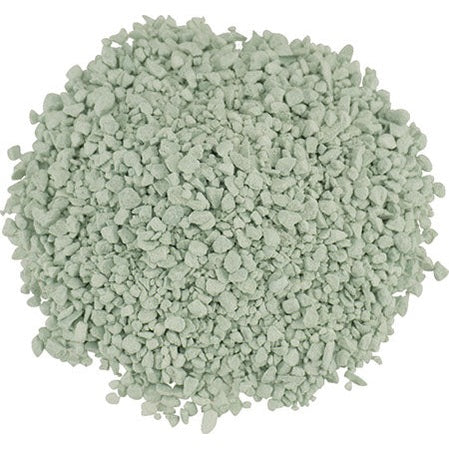
Kupzit® Hydrogen Sulfide Remover
Kupzit® is an innovative copper citrate preparation developed for the elimination of sulfide off-flavors, particularly hydrogen sulfide odors in wine and fruit wine. Kupzit® contains 2 % copper citrate. For easy dosage and handling, it is coated onto a mineral carrier material, a particularly pure, high-quality granulated bentonite. Kupzit® reacts within minutes with sulphur compounds such as hydrogen sulfide and mercaptans. These compounds bind with Kupzit and then settle out to the bottom. Dosage and Application: Trials are absolutely recommended. Generally, the dosage amount is 5-20 g/100 L or .05-.2 g/L. Exceptionally bad cases may require up to twice as much. See the attached Manufacturer's instructions for further details along with information on dosage and storage.
$4.39
-


Campden Tablets (Potassium Metabisulfite)
In wine, used to suppress naturally occurring microorganisms and prevent spoilage. Also works as an antioxidant. Add at a rate of 1 tab/gallon to achieve 75 ppm free SO2. These tablets use potassium metabisulphate as opposed to sodium metabisulphate. Potassium based campden tablets are generally preferred by winemakers who do not want to add excess sodium into their wine. Can also be added to water to remove chloramine (1 tab is sufficient for roughly 5-20 gallons)
$1.99


You have seen 96 out of 320 products