Detecting your location...

pH Testing

The pH is a measure of how strong the acids are in relation to all of the other compounds in a wine or must. The lower the value, the more strongly acidic the sample will be; i.e: a pH of 3.3 will be more acidic than 3.9. In winemaking, most pH values will be between the 3.0 and 4.0 ranges, with most of the focus happening in the range of tenths between these two ends ("3._pH"). While the TA will tell you how much physical acid there is in the wine or must, the pH tell you how this acidity will be perceived.

How To Test pH:
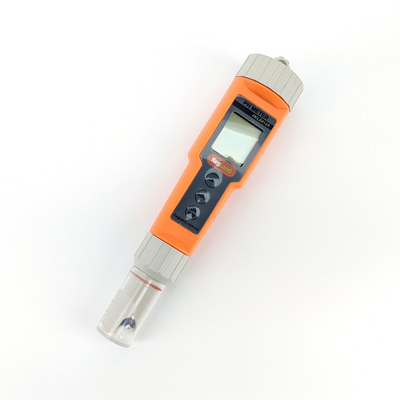
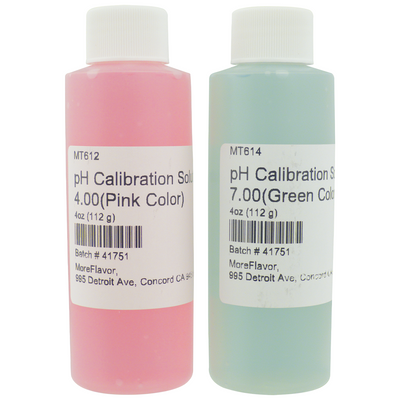
You test the pH using a specialized tool called a pH meter. The pH meter should be calibrated using a set of pH buffer solutions. Once calibrated, all that is needed to test the pH of wine or must is to insert the probe into the sample and slowly stir until the reading on the meter stabilizes. That's it!

Some Useful Info About pH:

  • Unlike TA testing and adjusting, pH adjustments are not linear; if you add 1 g/L of acid to a wine or must you now have exactly 1 more g/L of acid in solution and a TA test will confirm this. However, if you add 1 g/L of Potassium Carbonate to a wine or must the reaction will vary from wine to wine and the pH will not shift in a linear, predictable fashion. This is why any attempt to adjust the pH should start with a bench trial!
  • pH units are logarithmic; a pH of 3.0 is ten times more acidic than a pH of 4.0. So beware, a little shift goes a long way.
  • The effectiveness and amount of free SO2 needed to protect our wines is directly tied to wine pH: lower pHs require less free SO2, and higher pHs require more free SO2 to achieve the same amount of protection. Note: at pH 3.8 and higher, it is not chemically possible to maintain the amount of free SO2 in the wine that is technically required to protect it. So, if your wine has a high pH, then we highly recommend adjusting the pH down (using tartaric acid).

Everything you need to know to get the most out of your pH meter can be found in MoreWine!s Use and Care of a pH Meter Manual. In addition, complete information on adjusting pHs, conducting bench trials, and pH/SO2 management can be found in our Red Winemaking Manual and our White Winemaking Manual.
Shop By Collection
52 products

  • Milwaukee - M10007B pH 7.01 Calibration Solution Sachets (25)

    Milwaukee M10007B pH 7.01 Calibration Solution Sachets (25)

    Probe calibration is a simple procedure for optimal performance and should be done any time your readings become suspect. Calibration should be performed at least once a month. M10007B is a lab grade pH 7.01 calibration solution certified to meet the standard with an accuracy of ±0.01 pH removing the inaccuracies involved with mixing solutions from powder. Sachet packaging means that you get fresh solution every time. Ideal for infrequent or field use. No risk of using an expired calibration solution.  Milwaukee solutions are designed to help you achieve reliable and repeatable pH measurements while extending the life of your electrode. Design Features pH 7.01 Calibration Buffer Solution - 20 mL (box of 25) Fundamental for the correct use of electrodes and for obtaining the most accurate and reproducible readings Sealed against light and air Ideal for on-the-spot calibration Simply open, insert the tester or electrode into the sachet and calibrate Formulated with a 5 year expiry Color coded for easy identification

    $34.50

  • Milwaukee - M10004B pH 4.01 Calibration Solution Sachets (25)

    Milwaukee M10004B pH 4.01 Calibration Solution Sachets (25)

    M10004B is a lab grade pH 4.01 buffer solution certified to meet the standard to an accuracy of ±0.01 pH removing the inaccuracies involved with mixing calibration solutions from powder. Sachet packaging means that you get fresh solution every time. Ideal for infrequent or field use. No risk of using expired calibration solution.  Milwaukee solutions are designed to help you achieve reliable and repeatable pH measurements while extending the life of your electrode. Design Features pH 4.01 Calibration Buffer Solution - 20 mL (box of 25) Fundamental for the correct use of electrodes and for obtaining the most accurate and reproducible readings Sealed against light and air Ideal for on-the-spot calibration Simply open, insert the tester or electrode into the sachet and calibrate Formulated with a 5 year expiry Color coded for easy identification  

    $34.50

  • Milwaukee - MI456US PRO Mini Titrator for Titratable Acidity in Wine Milwaukee - MI456US PRO Mini Titrator for Titratable Acidity in Wine

    Milwaukee MI456US PRO Mini Titrator for Titratable Acidity in Wine

    Lab Grade. Accurate. Simple. Automated. The Milwaukee MI456US PRO TA Mini-Titrator is preferred by wine makers seeking results faster with lower costs and simple operation. The instrument comes with a preprogrammed analysis method designed for Total Titratable Acidity measurements on wine. The MI456US uses a piston-driven pump for accurate dynamic dosing, a built-in magnetic stirrer for a faster reaction and lab grade pH electrode. The MI456US automatically dispenses the titrant, determines the endpoint, and completes the calculations in a fraction of the time needed for a manual titration. The MI456US uses a preprogrammed method and lab grade pH electrode combined with an algorithm to determine the end of the titration reaction. Summary The Milwaukee MI456 PRO TA Mini Titrator is preferred by wine makers seeking results faster with lower costs and simple operation. The Milwaukee PRO TA Mini Titrator offers: Accuracy The MI456 PRO Mini Titrator is accurate to 5% of the reading with a resolution of 0.1 g/L with a range of 0.0 to 25.0 g/L of tartaric acid. The titrator uses piston-driven pump for accurate dynamic dosing, a built-in magnetic stirrer for a faster reaction and lab grade pH electrode. Simplicity The MI456 PRO Mini-Titrator is designed to for simple one button operation with pre-standardized titrant and pre-measured reagents for easy set up. Automated Operation The MI456 PRO Mini-Titrator uses a precision piston style dosing pump that dynamically adjusts the dosing volume as the voltage changes. With the MI456 PRO Mini-Titrator, you get a faster result with no need for manual intervention or calculation. Design Features Easy measurement: just measure the wine sample, add the reagents as directed, prepare pH probe and pump, add the stabilizer and start the titration by pressing the start button. Refillable, double junction lab grade pH electrode. Automatic temperature compensation. Range: 0.0 to 25.0 g/L of tartaric acid Accuracy: 5% of reading Method: Acid-base titration 700 rpm built-in stirrer. Simple and reliable peristaltic pump that ensure high dosing repeatability. Compact 8.2 x 8.4” footprint. Built-in algorithm to analyze the shape of the electrode response and to determine the reaction completion that automatically completes the analysis, makes all necessary calculations and assures a user friendly interface. Replacement Kit:  Mi556-KIT.  Individual Reagent Bottles.   Replacement pH electrode:  MA919B/1. Care and Use  pH electrodes usually start performing poorly because of problems with the probe. The two parts of the pH probe that cause problems are the glass sensing bulb and the reference junction. Sensing Bulb The glass bulb loses sensitivity with use and will eventually fail. This is true of all pH probes. Reference Junction The reference junction is a small hole that allows the meter to compare the sample to a reference. The reading is generated based on the electrical difference between the sample and reference. If the junction hole gets clogged, the pH electrode will no longer function.   You can extend the life of your pH electrode in the following ways. Cleaning and Storage All pH sensors have a limited life and response time gets longer with age. Properly maintaining your pH electrode will give you fast, accurate results for longer. So, be sure to order the Milwaukee Maintenance Kit code PH-Main at checkout time!  This will be needed to help clean and condition the pH electrode before use! Storage To minimize clogging the pH probe needs to be kept hydrated. Long periods of dry storage will damage the sensitivity of the probe. Allowing the probe to dry out may also result in the junction hole getting clogged. Storing in pH probe storage solution MA9015 or pH calibration buffers will help address both these issues. Do not store in tap water or DI water. This will damage the sensitivity of the probe. The best way to store the probe is with the probe's cap filled with storage solution or calibration buffer and the cap tightened to prevent leakage. It is also recommended that to store the electrode upright to further reduce the potential for leakage. Cleaning an Maintenance Residue from the sample can impact the sensitivity of the sensing bulb and clog the junction. This is especially true if the sample has a lot of organic material. We recommend regularly soaking your electrode in cleaning solution MA9016. Also: Inspect the electrode for damage or scratches, if present replace the electrode. Inspect the cable.  The connection cable and insulation must be intact. Connectors should be clean and dry. Rinse off salt deposits with water or DI water. Calibration The pH sensing bulbs become less sensitive over time so make sure that you are calibrating regularly to keep your MI456 Mini-Titrator readings accurate. Also, calibrate after cleaning or a long period of storage.  

    $954.50

  • Milwaukee - MI455US Mini Titrator for Sulfur Dioxide in Wine Milwaukee - MI455US Mini Titrator for Sulfur Dioxide in Wine

    Milwaukee MI455US Mini Titrator for Sulfur Dioxide in Wine

    Lab Grade. Accurate. Simple. Automated. The Milwaukee MI455US PRO SO₂ Mini-Titrator is preferred by wine makers seeking results faster with lower costs and simple operation. The MI455US uses a piston-driven pump for accurate dynamic dosing, a built-in magnetic stirrer for a faster reaction and lab grade platinum-ringed ORP electrode. Using a modified Ripper method, this mini-titrator does not rely on color change but uses potentiometric detection. The MI455US automatically dispenses the titrant, determines the endpoint, and completes the calculations in a fraction of the time needed for a manual titration. The MI455US uses a preprogrammed method and specialized ORP electrode combined with an algorithm to determine the end of the titration reaction. Summary The Milwaukee MI455 PRO SO2 Mini-Titrator is preferred by wine makers seeking results faster with lower costs and simple operation. The Milwaukee PRO SO2  PRO Mini-Titrator offers: Accuracy The MI455 PRO Mini-Titrator is accurate to 5% of the reading with a resolution of 1 ppm with a range of 0-400 ppm. The titrator uses piston-driven pump for accurate dynamic dosing, a built-in magnetic stirrer for a faster reaction and lab grade platinum-ringed ORP electrode.   Simplicity The MI455 PRO Mini-Titrator is designed to for simple one button operation with pre-standardized titrant and pre-measured reagents for easy set up.   Automated operation The MI455 PRO Mini-Titrator uses a precision piston style dosing pump that dynamically adjusts the dosing volume as the voltage changes. With the MI455 PRO Mini-Titrator, you get a faster result with no need for manual intervention or calculation. Design Features Measure both free and total SO₂ Easy measurement: just measure the wine sample, add the reagents as directed, prepare ORP probe and pump, add the stabilizer and start titration by pressing the start button. Refillable, double junction lab grade ORP electrode. 700 rpm built-in stirrer. Simple and reliable peristaltic pump that ensure high dosing repeatability. Compact 8.2 x 8.4” footprint. Built-in algorithm to analyze the shape of the electrode response and to determine the reaction completion that automatically completes the analysis, makes all necessary calculations and assures a user friendly interface. Replacement Reagent Kit:  Mi555-KIT.  Individual bottle here: Individual Reagent Bottles.  Replacement ORP Electrode:  MA924B/1. Care and Use  ORP electrodes usually start performing poorly because of problems with the probe. The two parts of the ORP probe that cause problems are the glass sensing bulb and the reference junction. Sensing Bulb The glass bulb loses sensitivity with use and will eventually fail. This is true of all ORP probes. Reference Junction The reference junction is a small hole that allows the meter to compare the sample to a reference. The reading is generated based on the electrical difference between the sample and reference. If the junction hole gets clogged, the ORP electrode will no longer function.   You can extend the life of your ORP electrode in the following ways. Cleaning and Storage All ORP sensors have a limited life and response time gets longer with age. Properly maintaining your ORP electrode will give you fast, accurate results for longer. So, be sure to order the Milwaukee Maintenance Kit code PH-Main at checkout time! This will be needed to help clean and condition the pH electrode before use! Storage To minimize clogging the ORP probe needs to be kept hydrated. Long periods of dry storage will damage the sensitivity of the probe. Allowing the probe to dry out may also result in the junction hole getting clogged. Storing in ORP probe storage solution MA9015 will help address both these issues. Do not store in tap water or DI water. This will damage the sensitivity of the probe. The best way to store the probe is with the probe's cap filled with storage solution and the cap tightened to prevent leakage. It is also recommended that to store the electrode upright to further reduce the potential for leakage. Cleaning an Maintenance Residue from the sample can impact the sensitivity of the sensing bulb and clog the junction. This is especially true if the sample has a lot of organic material. We recommend regularly soaking your electrode in cleaning solution MA9016. Also: Inspect the electrode for damage or scratches, if present replace the electrode. Inspect the cable.  The connection cable and insulation must be intact. Connectors should be clean and dry. Rinse off salt deposits with water or DI water.  

    $954.50

You have seen 52 out of 52 products

Jump Back In

© 2026 MoreWine

    • American Express
    • Apple Pay
    • Bancontact
    • Diners Club
    • Discover
    • Google Pay
    • iDEAL Wero
    • Mastercard
    • Shop Pay
    • USDC
    • Visa

    Login

    Forgot your password?

    Don't have an account yet?
    Create account