
Best Sellers - Last 30 Days
-
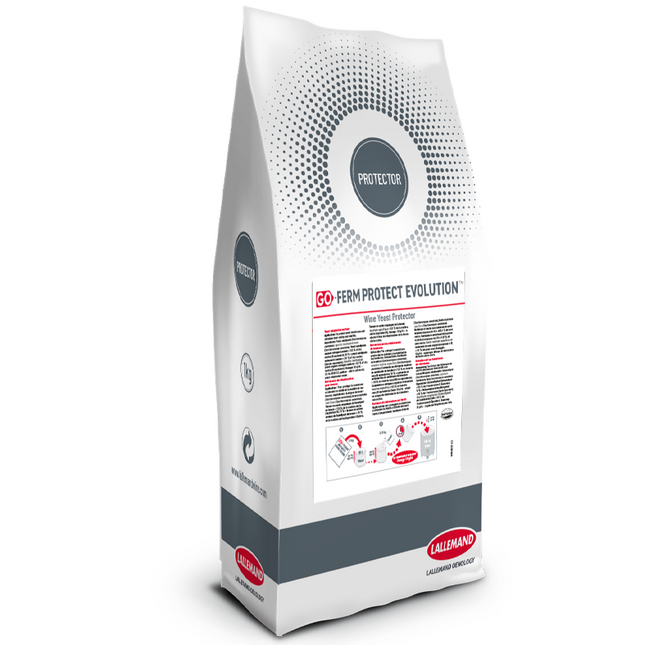
Lallemand | Go-Ferm Protect | Yeast Rehydration Nutrient
A new, advanced formulation of Go-Ferm Go-Ferm Protect is a natural yeast nutrient that is added to the yeast hydration water before adding your selected yeast strain. Its complex formula provides your yeast with the proper sterols, unsaturated fatty acids and micronutrients needed to begin fermentation in optimal shape. The great thing about Go-Ferm Protect is that the proper nutrients and vitamins are introduced BEFORE the yeast is added to the must. This way 100% of the nutrients are available to your selected yeast strain and won't be stolen away by any indigenous yeast or bacteria that may be present in the must before your yeast can become established. Go-Ferm Protect was created as a result of a multi-year study of problem fermentations by Lallemand and the National Agricultural Research Institute (INRA) in France. During this period, they looked at the adverse effects on the yeast from overripe fruit (>28 Brix), low nutrient levels, overclarification of the juice and poor fruit quality (Botrytis, rot, high bacteria count, insecticide and fungicide residue). Their research showed that musts deficient in sterols and unsaturated fatty acids made yeast more susceptible to ethanol toxicity (high alcohol), osmotic shock (high sugar), temperature and others stress factors. In response to this data they created the NATSTEP (NATural STErol Protection) process that incorporated sterols, unsaturated fatty acids, as well as vitamins and minerals into an advance yeast hydration nutrient: Go-Ferm Protect. Go-Ferm Protect provides a combination of protective and nutritional benefits that ensure your yeast begins your fermentation in peak form! The best part is that if your fruit is in great shape then Go-Ferm Protect will simply help your yeast out that much more! Go-Ferm Protect does not contain any DAP, as DAP is harmful to the yeast during the rehydration process. GO-Ferm is usually used in conjunction with our Fermaid K yeast nutrient; where Go-Ferm Protect is used at yeast hydration then Fermaid K is added at the first signs of fermentation and again after 1/3 sugar depletion. Use: Use at a rate of 1.25 g Go-Ferm Protect per 1 g of yeast. A rough approximate of weight is 1 tsp = 3.2 grams. We highly recommend using a scale to weigh the product for an accurate dose. We do not recommend relying on these rough conversions for accurate dosage rates. Download the PDF Like Go Ferm Protect? Then you will love CellarScience® FermStart!
$2.79
-
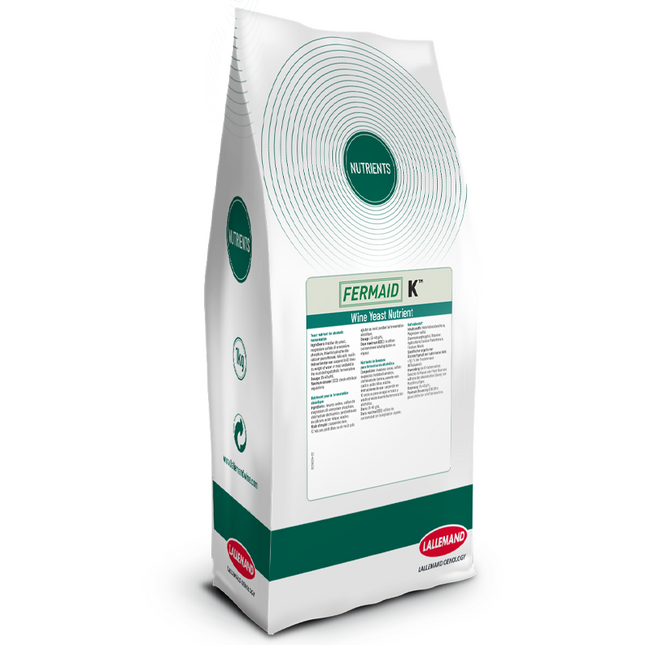
Lallemand Fermaid K | Yeast Nutrient for Strong Fermentations
Fermaid K – Complete Yeast Nutrient for Strong, Clean Fermentations Provides a balanced blend of organic and inorganic nitrogen to support vigorous yeast growth Delivers consistent fermentation kinetics and helps prevent sluggish or stuck ferments Reduces the risk of off-aromas such as hydrogen sulfide by supporting healthy yeast metabolism Enhances fermentation security, especially in high-sugar musts or stressful conditions More immediately available YAN than Fermaid O due to its inclusion of diammonium phosphate (DAP) Fermaid K is a widely used yeast nutrient developed by Lallemand to support strong, reliable alcoholic fermentations. It contains a combination of inactivated yeast (for organic nutrients) and diammonium phosphate (DAP) to supply both slow- and fast-release nitrogen. This dual-action profile provides yeast with the nutrients they need throughout the growth phase and active fermentation, improving cell viability, reducing fermentation stress, and minimizing the formation of undesirable sulfur compounds. Fermaid K is especially effective in fermentations that begin with low YAN, high sugar content, or other challenging conditions that demand immediate nitrogen availability. Fermaid K contributes approximately 1 ppm of measurable YAN for every gram per hectoliter used. That means: 1 gram per liter adds 100 ppm of YAN 1 gram per gallon adds approximately 378 ppm of YAN In comparison, Fermaid O contains only organic nitrogen and provides about 0.4 ppm measurable YAN per gram per hectoliter, or 40 ppm per gram per liter, and 151 ppm per gram per gallon. Fermaid O is preferred for slower, more controlled fermentations or when avoiding inorganic nitrogen is important. Fermaid K is ideal when rapid yeast growth and fermentation speed are critical. Protocol Rehydrate yeast first, then add Fermaid K at the end of the lag phase (typically around 24–48 hours after inoculation or at approximately 1/3 sugar depletion). Suspend in 10 times its weight of clean must or water, stir thoroughly, and add to the fermenting must with adequate mixing. Avoid adding at the same time as sulfites or enzymes. Usage Rates Recommended dosage: 20–40 grams per hectoliter = 0.2–0.4 grams per liter = 0.76–1.5 grams per gallon Adjust dosage based on initial YAN content, fermentation conditions, and yeast strain requirements. Use higher rates in low-YAN musts or high Brix ferments to maintain healthy yeast activity throughout. Comparing the Yeast Available Nitrogen contribution of Fermaid K vrs Fermaid O If you add 1 gram per liter of Fermaid K, it contributes 100 ppm of YAN. If you add 1 gram per gallon of Fermaid K, it contributes approximately 378 ppm of YAN. If you add 1 gram per liter of Fermaid O, it contributes 40 ppm of YAN (Yeast Assimilable Nitrogen). If you add 1 gram per gallon of Fermaid O, it contributes approximately 151 ppm of YAN. A rough approximate of weight is 1 tsp = 4.7 grams. We highly recommend using a scale to weigh the product for an accurate dose. We do not recommend relying on these rough conversions for accurate dosage rates.
$1.99
-
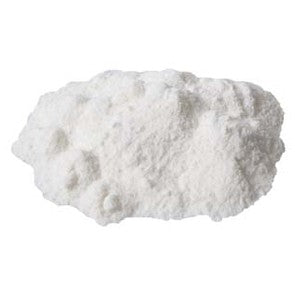
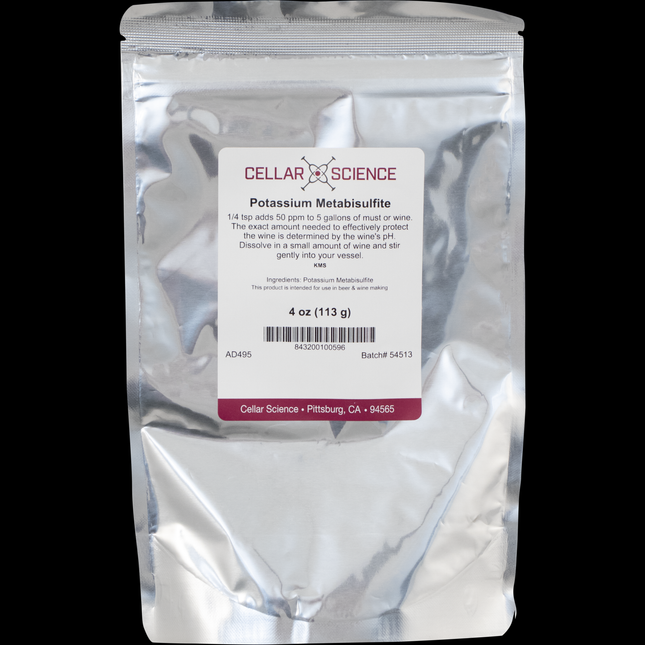
Potassium Metabisulfite
Potassium Metabisulfite, (often referred to as "SO2", "sulfites" "meta", or "meta-bi") has several uses in winemaking. At the crush, sulfites are generally used to help control the spoilage bacteria and indigenous yeast that may already be present both on the fruit and in the winery (i.e. on the picking bins, processing equipment, tanks, tubing, etc). The amount generally used is enough to inhibit most of the unwanted organisms but not enough to hinder a cultured yeast, which has a higher tolerance to sulfites than most of the indigenous organisms do. This inhibition effectively "wipes the slate clean" for the cultured yeast to step in and rapidly colonize the must so that it can effectively dominate the subsequent fermentation. In addition, sulfites also help to inhibit the enzymatic browning of both musts and finished wines so that all of their delicate complexities can be preserved. Later, during storage and in the bottle, sulfites at the proper levels will further protect a wine by continuing to inhibit spoilage organisms, as well as by scavenging oxygen. Note that the exact amount needed to effectively do the job is determined by the pH of the wine. Refer to our MoreManuals! on Red or White Winemaking or one of the winemaking books that we offer for a complete explanation on how to properly manage sulfites. In addition, it's important to keep in mind that free SO2 levels fall faster in wood cooperage than in glass or stainless, so if you are using a barrel you will most likely need to manage sulfite levels more closely. The most common form of Metabisulfite is as a powder which is fixed with potassium or sodium. 1/4 tsp of Potassium Metabisulfite adds 50ppm to 5 gallons of must. Old Metabisulfite loses potency with time and should be replaced every year to assure that you are getting correct levels. You can use old Metabisulfite to make solutions for sanitizing equipment.
$6.99
-
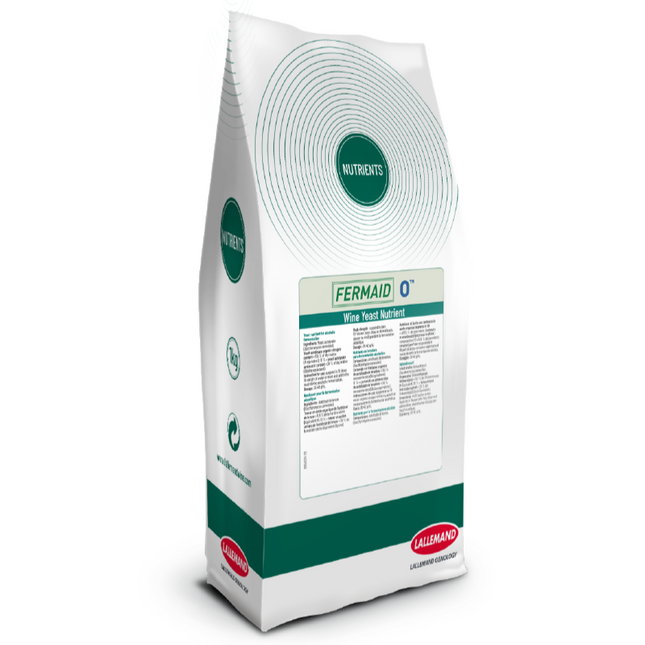
Lallemand Fermaid O | Yeast Nutrient | Organic Nitrogen | No Added DAP
Fermaid O is a newer formulation of the same Fermaid K that winemakers everywhere have learned to trust their ferments to. The main difference in composition between the two, is that the Fermaid O has replaced the inorganic DAP with an organic source. In terms of how this benefits the winemaker, there are several points! Features: Organic Nitrogen is easier for your yeast to digest, resulting in a smoother, more consistent fermentation. Fewer fermentation spikes means better yeast health, and the ability to ferment to its full capacity. Compared to DAP, Fermaid O will result in lower heat output from the yeast, and lower levels of negative sulfur compounds. This is a nutrient which will boost the quality of wine, regardless of process. Lower heat production, less negative flavor compounds, better overall fermentation kinetics and flavors! To Use: Use at a rate of 1.5g / gal of must/juice. Like Fermaid O? Then you will love CellarScience® FermFed DAP Free Yeast Nutrient!
$3.79
-


Lallemand Acti-ML | Nutrient for Reliable Malolactic Fermentation
Acti-ML – Lallemand Nutrient Blend for Reliable Malolactic Fermentation Stimulates fast and complete malolactic fermentation in challenging wines Provides essential peptides, vitamins, and minerals to support Oenococcus oeni Reduces lag phase and promotes bacterial survival during MLF Helps avoid sluggish or stuck malolactic fermentation, especially in high-alcohol or low-pH wines Optimized for co-inoculation or sequential inoculation, with a formulation superior to generic yeast hulls Acti-ML is a complex nutrient blend developed by Lallemand to support the specific needs of malolactic bacteria during MLF. It is composed of yeast autolysates and naturally derived components rich in peptides, amino acids, vitamins, and minerals. These nutrients are critical for Oenococcus oeni, especially in conditions where nutrient content is limited or inhibitory compounds like alcohol, low pH, or SO₂ are present. Acti-ML shortens the lag phase and improves cell viability, helping ensure a strong and complete malolactic fermentation. Compared to simple yeast hulls or non-specific nutrients, Acti-ML is formulated specifically for malolactic bacteria, giving winemakers a more targeted and effective solution. Protocol Suspend Acti-ML in 10 times its weight of clean, chlorine-free water or wine at 20–25°C. Allow to hydrate for 5–10 minutes with gentle stirring. Add to the wine just before or at the time of malolactic bacterial inoculation. Compatible with both co-inoculation (24–48 hours after yeast inoculation) and sequential inoculation (after alcoholic fermentation is complete). Ensure thorough mixing in the tank. Usage Rates Recommended dosage: 20–40 grams per hectoliter = 0.2–0.4 grams per liter = 0.76–1.5 grams per gallon Use the lower end of the range for clean, balanced wines with moderate alcohol and the higher end for wines with elevated alcohol, low pH, or other stress factors.
$2.29
-


Lallemand Opti Malo Plus | ML Nutrient for Low pH and High Alcohol Wines
Opti'Malo Plus – Lallemand Nutrient for Strong, Secure Malolactic Fermentation Supports rapid and complete malolactic fermentation by enhancing Oenococcus oeni performance Provides a balanced supply of amino acids, minerals, and co-factors critical for bacterial health Reduces lag phase and improves survival of malolactic bacteria under stressful conditions Helps prevent sluggish or incomplete MLF in wines with low pH or high alcohol More effective than generic yeast hulls due to its targeted formulation and refined composition Opti'Malo Plus is a specific inactivated yeast nutrient developed by Lallemand to promote efficient malolactic fermentation. It delivers key micronutrients, peptides, and vitamins that are essential to the growth and metabolism of Oenococcus oeni, especially in conditions where nutrient deficiencies or inhibitors like alcohol and low pH are present. By stimulating faster cell adaptation and stronger bacterial activity, Opti'Malo Plus helps reduce the risk of sluggish or stuck malolactic fermentations. Compared to general-purpose yeast derivatives, Opti'Malo Plus is more targeted and efficient. Opti'Malo Plus differs from Lallemand’s Acti-ML in that it contains a more refined composition with higher concentrations of peptide fractions and co-factors that directly support the metabolic activity of Oenococcus oeni. While Acti-ML also promotes MLF by providing nutrients, it includes a broader mix of yeast hulls and autolysates designed more for cell survival. Opti'Malo Plus is better suited for wines under significant stress—such as low pH, high alcohol, or nutrient depletion—and offers enhanced performance for both co-inoculation and sequential inoculation strategies. Protocol Suspend Opti'Malo Plus in 10 times its weight of chlorine-free water or wine at 20–25°C. Allow to hydrate for 5–10 minutes with gentle stirring. Add to wine immediately before or at the time of malolactic inoculation. It may be used in co-inoculation (24–48 hours after yeast inoculation) or in sequential inoculation after alcoholic fermentation is complete. Mix thoroughly to ensure even distribution. Usage Rates Recommended dosage: 20–40 grams per hectoliter = 0.2–0.4 grams per liter = 0.76–1.5 grams per gallon Use the low end of the range in balanced wines with moderate alcohol and acidity. Increase up to high end in wines with low pH, high alcohol, or nutrient-depleted conditions to ensure full and secure malolactic fermentation.
$2.69
-


Lallemand Opti Red | For Color | Body | Tannin Integration
OptiRED – Lallemand Yeast Derivative for Color, Body & Tannin Integration in Red Wines Enhances early formation of polysaccharide–polyphenol complexes for more intense, stable color Rounds and smooths tannins to reduce harshness and astringency Builds fuller body and improved mouthfeel without altering varietal expression Can be used at the start or during fermentation for flexible control over tannin structure Outperforms generic inactivated yeast products by delivering high‑molecular‑weight mannoproteins via MEX™ processing OptiRED is a tailored inactivated yeast derivative produced by Lallemand using an innovative MEX™ method that makes high-molecular-weight polysaccharides immediately available in the must. When introduced early during maceration or alcohol fermentation, these compounds complex with freshly released anthocyanins and tannins, protecting color integrity and creating softer, more integrated tannin profiles. The result is a red wine with enhanced intensity, smoother palate, improved structural balance, and longer-term color stability—without over‑manipulating varietal character. This effect is particularly noticeable in light‑ to medium‑bodied reds or in vintages with lower phenolic maturity. Protocol Suspend the recommended dose in 10× its weight of clean must or water. Stir thoroughly to ensure full dispersion, then add at one of these points: • At the beginning of maceration or alcoholic fermentation for enhanced color protection and tannin integration • Toward the end of fermentation to smooth out persistent harshness without affecting initial extraction. Usage Rates Recommended dosage: 20–40 g per hectoliter = 0.2–0.4 g per liter = 0.76–1.5 g per gallon For standard use, 30 g/hL (0.3 g/L or ~1.14 g/gal) provides excellent balance between color enhancement and mouthfeel refinement. For home users a rough approximate of weight is 1 tsp = 2.6 grams. We highly recommend using a scale to weigh the product for an accurate dose. We do not recommend relying on these rough conversions for accurate dosage rates.
$2.69
-
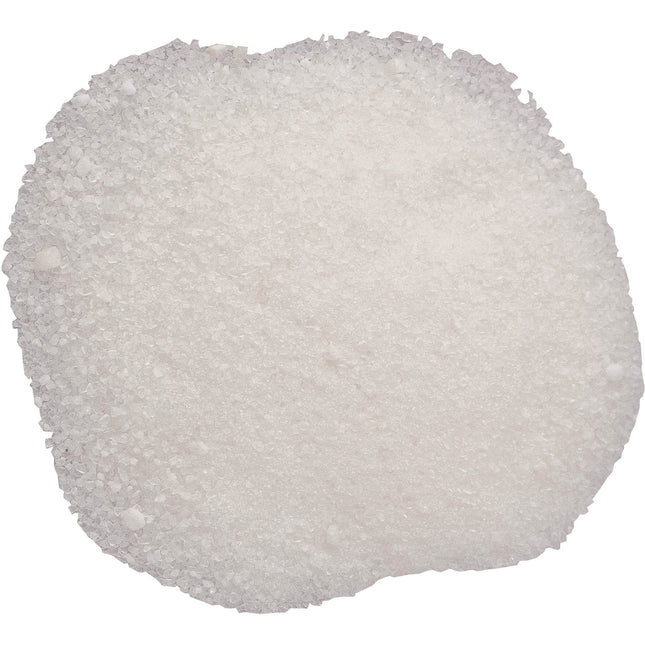
Tartaric Acid
MoreWine!'s Tartaric Acid is processed naturally in Europe from grapes and is the preferred acid for adjusting acid levels in wine. Be aware that a lot Tartaric Acid available to home winemakers is artificially made, comes from China, and does not integrate into the wine as well. Some of this tartaric includes the designation of "food-grade". Because MoreWine! packages this product you can be assured you are getting the highest winery-grade quality. 3.8g per gallon adjusts acidity by +.1%. As a note: some tartaric acid will drop out of suspension as potassium bitartrate if you are doing any cold stabilization. You might want to re-test total acidity after cold stabilization.
$5.99
-


Lalvin ICV D254™ | Dry Wine Yeast
Lalvin ICV D254 is the go-to choice for winemakers looking to produce wines with remarkable structure, rich mouthfeel, and intense aromatic complexity Whether crafting a powerful Cabernet, refining a lush Chardonnay, or enhancing a blended red, ICV D254 consistently delivers bold, layered wines with exceptional depth Enhance complexity and mouthfeel in premium wines Lalvin ICV D254 is a premium wine yeast strain selected for its ability to enhance mouthfeel, aromatic intensity, and flavor complexity. Known for its impact on color stability and tannin integration, ICV D254 produces wines with rich dark fruit, spice, and earthy notes, making it ideal for full-bodied reds and structured white wines. Enhanced Mouthfeel: Boosts polysaccharide production, contributing to a smooth, velvety texture. Aromatic Complexity: Promotes rich expressions of black cherry, plum, and dark chocolate in reds, and pear, honey, and vanilla in whites. Alcohol Tolerance: Effective up to 16% ABV, allowing for complete fermentation in high-sugar musts. Attenuation Rate: Typically achieves 85–90% attenuation, ensuring a well-structured, dry finish. Temperature Range: Performs optimally between 59°F (15°C) and 82°F (28°C), enhancing both aromatic expression and mouthfeel. Medium Flocculation: Settles well post-fermentation, contributing to clarity and ease of racking. Applications: Full-Bodied Red Wines: Perfect for Cabernet Sauvignon, Merlot, Syrah, and Zinfandel, promoting complexity and tannin integration. Barrel-Aged Reds: Enhances oak integration, providing deeper spice and toasted vanilla notes. White Wines: Ideal for Chardonnay and Viognier, contributing to a creamy mouthfeel and enhanced structure. Blended Reds: Suitable for GSM blends and Bordeaux blends, adding depth and mouth-coating richness. Flavor Profile: Dark Fruits: Bold expressions of black cherry, plum, and blackberry dominate the palate. Spice & Earthiness: Subtle hints of cocoa, toasted oak, and leather add complexity. Creamy Mouthfeel: Enhanced polysaccharide production leads to a lush, smooth palate experience. Nutty & Vanilla Notes: When barrel-aged, promotes toasted almond and vanilla bean characteristics. Usage: Rehydration: Rehydrate in 10 times its weight of chlorine-free water at 95°F (35°C) for 15–20 minutes. Stir gently to prevent clumping. Pitch Rate: Use 1–1.5 grams per gallon (0.25–0.4 grams per liter) for optimal fermentation and mouthfeel enhancement. Nutrient Addition: Supplement with yeast nutrient to prevent sluggish fermentation, especially in high-Brix musts. Fermentation Temperature: Maintain between 59°F and 82°F to optimize ester formation and aromatic depth. Extended Maceration: Ideal for long maceration to deepen color, tannin complexity, and mouthfeel. Download the PDF Download the PDF
$3.19
-

Lallzyme EX | Fermentation Enzyme for Early Drinking Red Wines
Specially formulated enzyme preparation for improved color intensity and stability, greater mouthfeel, and enhanced fruity, floral, spicy flavors in wine. Used primarily in red wines for the aforementioned reasons, it can also be used in white wines for increased extraction (however we recommend Lallzyme C-Max for whites because it helps the solids settle out as well). Based on the activity of a blend of cellulases, hemicellulases, and pectinases, this preparation aids in the extraction, then stabilization of water soluble phenols found in cells of grape skins. A dry, granular product requiring no special storage conditions prior to use. We have used this enzyme on our wine here at MoreWine and found the difference to be nothing short of amazing. Currently only available at MoreWine in this size! To use dissolve Lallzyme EX into a sufficient amount of water (usual ration is 1:100) and add to must with your other additions prior to the onset of fermentation. Dosage is 0.1g Lallzyme per gallon of must. Store dry enzyme at room temperature, around 25 C° (77 F°). Once rehydrated use within a few hours.
$2.39
-

Viniflora® CH16 | Dry Malolactic Bacteria | 1.5 g
Selected for its outstanding ability to conduct fast malolactic fermentation in high alcohol red wine Direct inoculation, freeze-dried bacteria – does not require rehydration High numbers of active cells which ensure a quick start of fermentation Good for 66 gallons. Viniflora CH16 is a freeze-dried pure culture of Oenococcus oeni. This malolactic bacterium has been carefully selected to induce malolactic fermentation in red wine with high alcohol levels, after direct inoculation. Viniflora CH16 has been isolated from a 16% Petit shiraz wine in the Russian River area of California, USA. The bacterium's natural environment gives a good picture of its application; CH16 has been carefully selected for its outstanding ability to conduct fast malolactic fermentation in high alcohol red wine (up to 16% v/v) with a pH value above 3.4. Innoculation: Viniflora CH16 should be added to dry wine, immediately after the alcoholic fermentation. Viniflora CH16 should always be inoculated directly into the wine. No rehydration or reactivation is required. For more information about ML Bacteria, please see MoreWine!'s Guide to Malolactic Fermentation. Characteristics: Very high fermentation speed Low production of volatile acidity Outstanding tolerance to high alcohol levels. Excellent all round tolerance to pH, temperature and SO2 No production of biogenic amines Key Features: Recommended for red wines Direct inoculation, freeze-dried bacteria – does not require rehydration High numbers of active cells which ensure a quick start of fermentation This strain is pH tolerant to 3.4, Total SO2 to 40 ppm (red wines), temperature 62 – 77° F and alcohol to 16% (v/v) Low level of volatile acidity Cinnamoyl Esterase Negative
$45.99
-


Tannin FT Rouge
This product replaces our TAN120 - Tannin VR Supra Enological tannins offer the winemaker the possibility to add refined, highly-bindable tannin to your wine at any stage during the process. Benefits can include increased structure and mouthfeel, color stabilization, stability, anti-oxidative qualities, and overall complexity. Tannins can reduce vegetal/herbaceous characteristics and perceived astringency. We offer four types of oenolgical tannins, two for use during fermentation, and two for use during the aging phase. How Fermentation Tannins Work Designed specifically for North American red wine fermentations, Scott'Tan FT Rouge is composed of exotic wood and chestnut tannins. These highly reactive tannins bind with anthocyanins (color compounds) in the first 3-4 days of fermentation. If sufficient natural tannins are not present in must, anthocyanins may precipitate, resulting in a loss of color. Using an enzyme like Lallzyme EX in conjunction with FT Rouge can enhance this binding of color. The continual bonding going on throughout the ferment will also improve the mid palate structure and help either significantly reduce or eliminate vegetal/herbaceous characters. Tannin additions at this early stage prove to be most efficient and are better integrated into the wine. Important!: If being used in conjunction with one another, tannins should be added 6-8 hours after the addition of the enzymes or you run the risk of having the tannins reacting with and removing the enzymes before they have had a chance to do their job!. To Use Sprinkle directly onto must and either mix well with your punch down tool or pump over to ensure thorough mixing. If adding to the wine post-fermentation we recommend allowing 3-6 weeks for full integration before racking, fining, filtering or bottling. Recommended dosage rate: 0.8-1.9 g/gal. Use at an initial rate of 1.3 gram per gallon during punch down/pump over. If you want additional tannin add at a rate of .25 g/gal. A rough approximate of weight is 1 tsp = 2.4 grams. We highly recommend using a scale to weigh the product for an accurate dose. We do not recommend relying on these rough conversions for accurate dosage rates. Unopened the shelf life is 5 years at 18ºC(65ºF).
$2.79
-
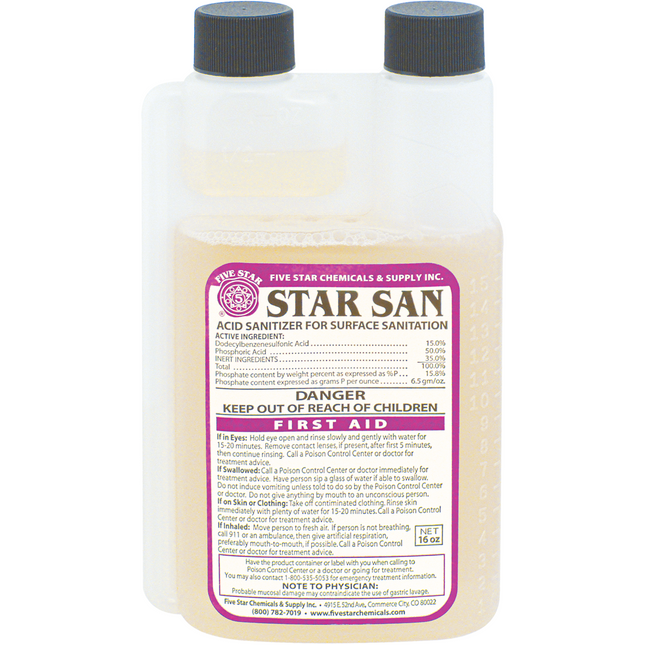
Five Star | Star San Sanitizer | Acid-Based Sanitizer | High Foaming | Flavorless, Odorless, & Non-Toxic
Star San is an acid-based sanitizer that is quick, odorless, tasteless and safe for most materials except softer metals. As a high foamer, Star San's foaming action insures coverage and contact time in larger vessels and better penetration into nooks and crannys. Star San and is perfectly safe and non-toxic: any foam that is left over in your vessels or on your equipment will not harm your wine or you. Star San will not impart any flavors or odors. Star San is easy on the environment as well: Despite being a very effective acid-based sanitizer at its prescribed concentration, raising the pH well above 3.5 (using simple baking soda or any waste PBW) renders Star San inactive as a sanitizer and the raw ingredients actually feed the aerobic bacteria found in septic systems or wastewater treatment facilities! To Use: Use of 1 oz per 5 gallons of water and a contact time of 1 minute makes Star San very economical and convenient. If you plan on making some up for spray applications it is best to use distilled or RO water to maximize the life of the unused portion (minerals in tap water reduce the shelf life of Star San once in solution). If a lower foaming alternative is preferred for bottling, filtering, or a final acid rinse, check out Saniclean. Complete information on cleaning & sanitizing can be found in our Cleaning & Sanitizing manual. Please note: Due to DOT HAZMAT shipping restrictions, orders for 15-gallon, 55-gallon, or multiple 5-gallon units will require freight shipping. These sizes are intended for commercial use. HAZMAT items are not able to be returned.
$17.99
-

Wine Corks - 1 3/4 in. Grade 3
A standard length and diameter single punch cork in a high quality grading at a reasonable price. Corks are typically graded on a scale of 1-10, 1 being the best score, based on the degree of porousness that the actual punch of cork exhibits. Cork trees that show a higher population of worms or fungi tend to yield cork crops which are more porous. The Grade 3 corks show less than average porousness and are on par with the quality of cork used in many commercial facilities. Grade 1 & 2 corks are almost completely solid and sell at very high prices. These corks are harvested and punched in Portugal, like the majority of the rest of the corks available today. They are processed, sorted, prepped and packaged here in Northern California.
$21.99
-
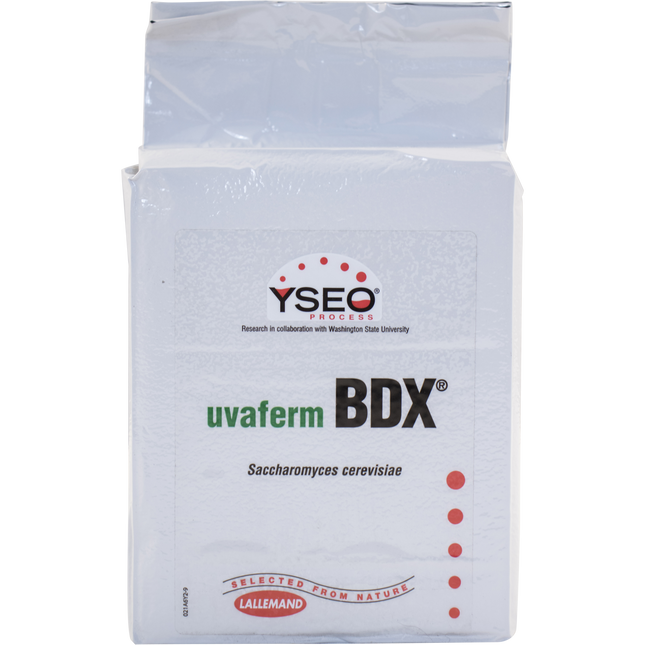
Lallemand UVAFERM BDX™ | Bordeaux Red | Dry Wine Yeast
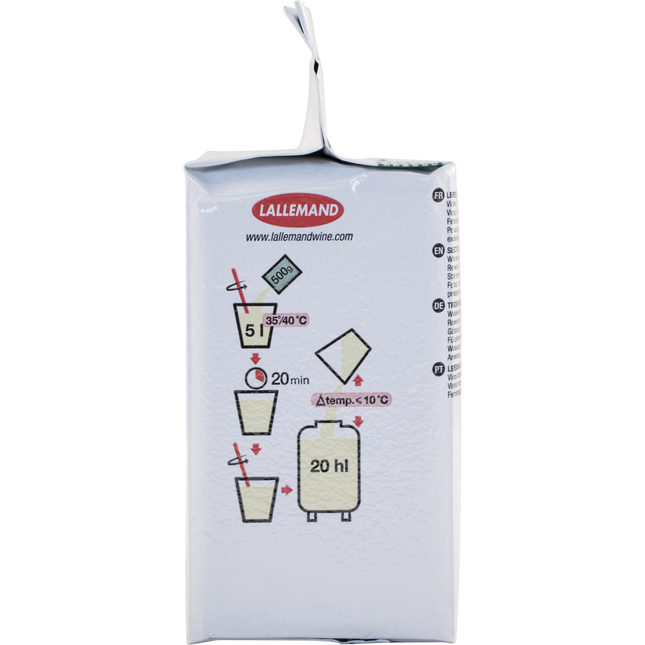
BDX is the yeast of choice for winemakers looking to craft bold, structured red wines with rich complexity and deep color Whether perfecting a Cabernet Sauvignon, enhancing the fruit-forward nature of Merlot, or refining a Bordeaux blend, BDX delivers consistency, elegance, and aging potential in every batch Enhanced structure and rich complexity for bold red wines BDX is a premium wine yeast strain specifically developed for full-bodied red wines that require enhanced structure, color stability, and aromatic complexity. Ideal for Bordeaux varietals, this strain excels at promoting deep color extraction and well-rounded tannin integration. Its robust fermentation capabilities ensure complete attenuation, even in high-sugar musts, while preserving the varietal characteristics and complexity of the wine. Deep Color Extraction: Promotes high anthocyanin stability for vibrant, long-lasting color. Enhanced Tannin Structure: Supports smooth tannin development and mouthfeel integration. Alcohol Tolerance: Effective up to 16% ABV, allowing for strong, full-bodied wines. Temperature Range: Performs optimally between 64°F (18°C) and 86°F (30°C), perfect for achieving rich complexity. High Flocculation: Contributes to excellent clarity post-fermentation. Minimal SO₂ Production: Reduces the risk of off-flavors, preserving natural aromatics. Applications Cabernet Sauvignon: Boosts boldness and enhances tannin structure for optimal aging. Merlot & Malbec: Promotes fruit intensity and smooth mouthfeel while enhancing complexity. Cabernet Franc: Elevates spice and berry notes with refined tannins. Bordeaux Blends: Perfect for crafting structured, age-worthy blends with balanced tannins and vibrant color. Flavor Profile Dark Fruit Expressions: Highlights blackberry, plum, and black cherry with layered depth. Spice and Tobacco Notes: Accentuates hints of black pepper, cedar, and dark chocolate. Smooth Tannin Integration: Creates a well-rounded mouthfeel with structured complexity. Aging Potential: Supports development over time, enhancing depth and smoothness. Usage Rehydration: Rehydrate in 10 times its weight of chlorine-free water at 95°F (35°C) for 15–20 minutes. Stir gently to prevent clumping. Pitch Rate: Use 1–1.5 grams per gallon (0.25–0.4 grams per liter) for optimal fermentation and tannin extraction. Nutrient Addition: Supplement with yeast nutrients, particularly in low-nitrogen musts, to avoid sluggish fermentation. Fermentation Temperature: Maintain between 64°F and 86°F to promote deep color and structured tannins. Extended Maceration: Ideal for longer maceration periods to intensify flavor and tannin complexity. Download the PDF Download the PDF
$3.19
-
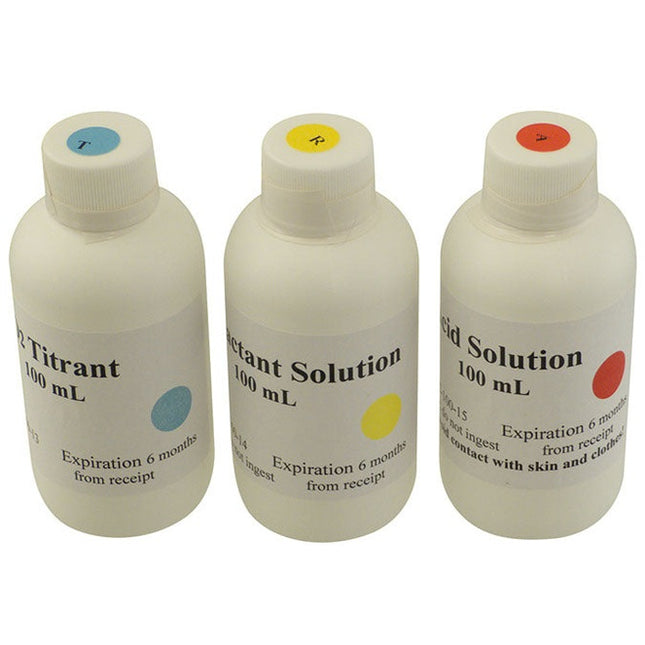
Vinmetrica - SO2 Reagent Kit for MT560 & MT570
Includes Acid Solution, Reactant, and SO2 Titrant. Replenishes the SO2 reagents supplied with the SC-100A, SC-100 and SC-300 Analyzer kits. Quantity sufficient for approximately 50 tests. Note: The Acid Solution is not available for International Customers because it is treated as a Hazardous Material (it is possible to ship to Canada but it is nearly a US$ 70 extra shipping charge). Vinmetrica has distributors in Europe and in Canada. We recommend that international customers contact Vinmetrica directly for assistance finding a local distributor.
$67.00
-
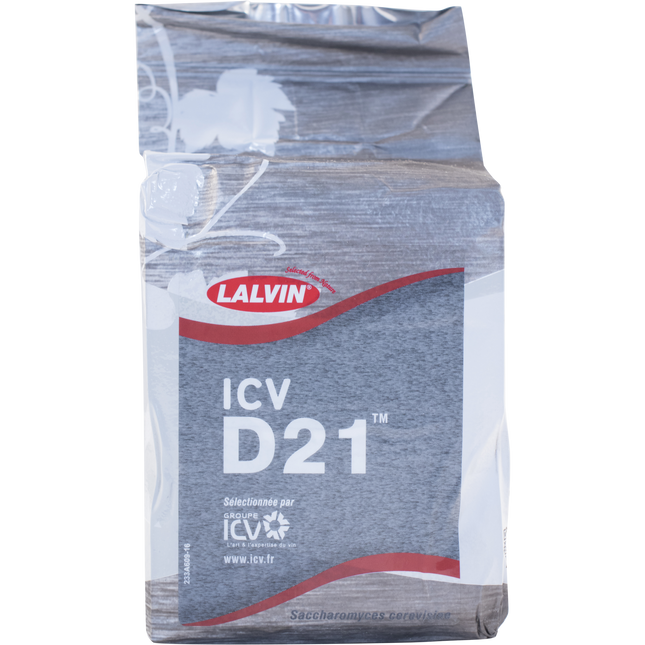
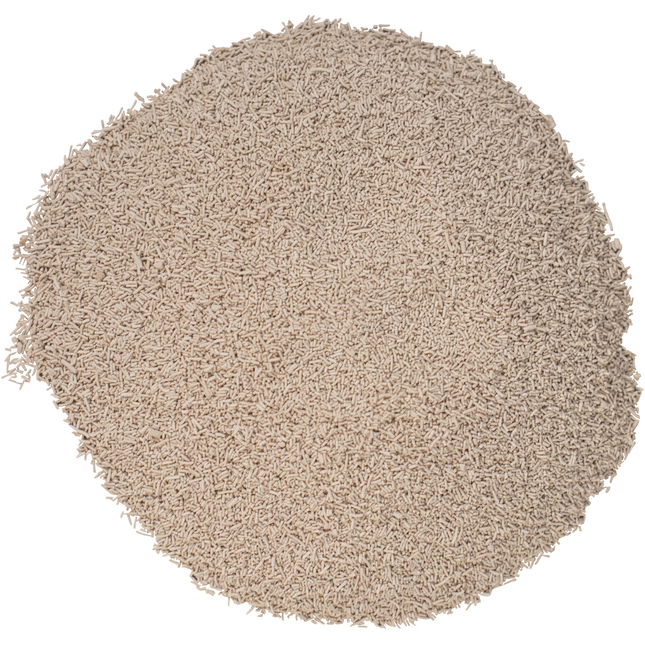
Lalvin ICV D21® | Dry Wine Yeast
ICV-D21 is the ideal choice for winemakers seeking to craft structured, full-bodied wines with bold aromatics and enhanced mouthfeel Whether perfecting a Cabernet Sauvignon, enhancing the richness of Syrah, or adding depth to Chardonnay, ICV-D21 consistently delivers complexity, elegance, and age-worthiness in every bottle Enhanced mouthfeel and rich aromatics for structured red and white wines ICV-D21 is a robust wine yeast strain specially developed by the Institut Coopératif du Vin (ICV) for crafting full-bodied red and white wines with enhanced mouthfeel and complex aromatics. Known for its ability to optimize tannin extraction and promote rich color stability, ICV-D21 is ideal for producing age-worthy wines with layered depth and intense fruit expression. Its consistent fermentation kinetics ensure reliable attenuation and balanced structure in high-Brix musts. Enhanced Mouthfeel: Promotes a smooth, velvety texture with well-structured tannins. Aromatic Complexity: Boosts expressions of dark berries, plum, and subtle floral notes. Alcohol Tolerance: Effective up to 16% ABV, allowing for rich, full-bodied wine production. Temperature Range: Performs optimally between 64°F (18°C) and 86°F (30°C), providing flexibility for various winemaking styles. Medium Flocculation: Contributes to clarity and stability post-fermentation. Low SO₂ Production: Preserves aromatic purity and minimizes off-flavors. Applications: Cabernet Sauvignon: Enhances bold fruit expression and promotes structured tannins. Merlot: Boosts plum and cherry notes while improving mouthfeel. Syrah: Elevates dark fruit and peppery spice with deep color extraction. Grenache: Enhances ripe red fruit flavors with a smooth finish. Chardonnay: Promotes complexity and rounded mouthfeel with subtle floral accents. Flavor Profile: Dark Fruits: Highlights blackberry, plum, and cherry with concentrated richness. Spice and Floral Notes: Accentuates hints of violet, licorice, and black pepper. Structured Tannins: Integrates smooth tannins for enhanced mouthfeel and aging potential. Aging Potential: Supports long-term aging, improving depth and complexity over time. Usage: Rehydration: Rehydrate in 10 times its weight of chlorine-free water at 95°F (35°C) for 15–20 minutes. Stir gently to prevent clumping. Pitch Rate: Use 1–1.5 grams per gallon (0.25–0.4 grams per liter) for optimal fermentation and flavor development. Nutrient Addition: Supplement with yeast nutrients, particularly in low-nitrogen musts, to ensure complete fermentation. Fermentation Temperature: Maintain between 64°F and 86°F for optimal tannin extraction and aromatic development. Extended Maceration: Ideal for long maceration periods to intensify structure and deepen flavor complexity. Download the PDF Download the PDF
$2.99
-

Lallemand | Enoferm Alpha™ | Dry Malolactic Bacteria
Enoferm Alpha will ferment at lower temperatures and at lower pH levels compared to older Viniflora strains of Oenococcus Oeni Alpha was selected as dominant strain that has the capcity to achieve reliable MLF and improve wine complexity This strain will help contribute to mouthfeel while lowering the perception of green and vegetative flavors Lallemand Oenology specializes in the development, production, and marketing of top-grade yeast and bacteria This was the first improved ML strain that we carried and still the most popular. When compared with the older Viniflora strains of Oenococcus Oeni, Enoferm Alpha (which is a different strain of Oenoccoccus Oeni) will ferment at lower temperatures and at lower pH levels. This means it is superior for both red and white wines and can be added later in the wine making process than the Viniflora strain, with the ideal time being right after the completion of primary fermentation. In addition to good performance in harsh conditions, Enoferm Alpha was preferred in blind tastings over the older Viniflora strain for its clean and fruity aromas, a decrease of vegetative and herbaceous notes and increased mouth-feel. Now we are selling multiple strains of improved ML bacteria including Beta, VP41, 31, and Baccus, giving you lots great bugs to choose from. Alpha was selected as dominant strain that has the capcity to achieve reliable MLF and improve wine complexity. Alpha will help contribute to mouthfeel while lowering the perception of green and vegetative flavors. Its low production of biogenic amines respects health concerns. For more information about ML Bacteria, please see MoreWine!'s Guide to Malolactic Fermentation. 2.5 g: good for 66 gallons 25 g: good for 660 gallons Alcohol tolerance: <15.5% v/v. SO2 tolerance: <50 ppm pH: >3.2 Temperature: >57°F You can't store malolactic bacteria once the package has been opened. Note: Malolactic bacteria added during the ferment will compete with the yeast for nutrients and are atagonistic to yeast, potentially causing higher VA levels. The best time to add an ML culture is after racking off the gross lees.
$39.99
-


Lallzyme EX-V™ | Fermentation Enzyme For Structured Red Wines
Lallzyme EX-V – Enzyme for Structured Red Wines with Enhanced Color and Tannin Stability Extracts color and tannins with improved integration for wines destined for aging Promotes stable anthocyanin-tannin bonding for long-lasting color Enhances mouthfeel, midpalate weight, and structural balance Improves juice yield and reduces solids through efficient cell wall degradation Balanced enzyme activity supports both extraction and finesse in premium red wines Lallzyme EX-V is a precision enzyme blend developed by Lallemand for red wine fermentations where structure, balance, and ageability are desired. It combines strong pectolytic activity with targeted cellulase and hemicellulase functions to break down grape skin cell walls, facilitating the release of anthocyanins and seed-derived tannins in a controlled, integrative manner. EX-V is ideal for varietals with moderate to firm skins or when crafting red wines intended for barrel aging, as it enhances phenolic complexity without over-extracting bitterness or astringency. Wines fermented with EX-V tend to show refined texture, vivid color, and excellent long-term stability. Comparison to Other Lallemand Maceration Enzymes: Compared to EX, which is best for early-drinking, fruit-forward reds, EX-V is designed for more structured, age-worthy styles with higher tannin and color stability. EX = softer, fruit-driven reds for early release EX-V = structured, balanced reds with aging potential Protocol Dilute Lallzyme EX-V in 10 times its weight of chlorine-free water. Add to crushed grapes or must at the beginning of fermentation. Mix thoroughly for even dispersion. Optimal temperature range: 20–30°C. Avoid adding below 10°C or after alcoholic fermentation begins. Usage Rates Recommended dosage: 30–40 grams per ton of grapes = 0.66–0.88 grams per hectoliter (assuming 450 L/ton) = 0.0066–0.0088 grams per liter = 0.025–0.033 grams per gallon Use the lower end of the range for moderately structured fruit or extended maceration. Use the higher range for tighter-skinned grapes, shorter fermentations, or when greater phenolic extraction and color stability are required for barrel-aged or long-lived reds.
$2.89
-
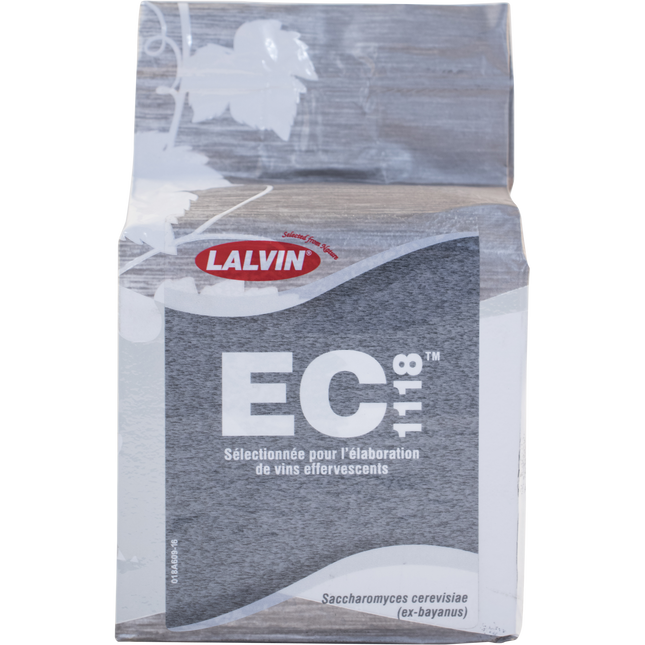
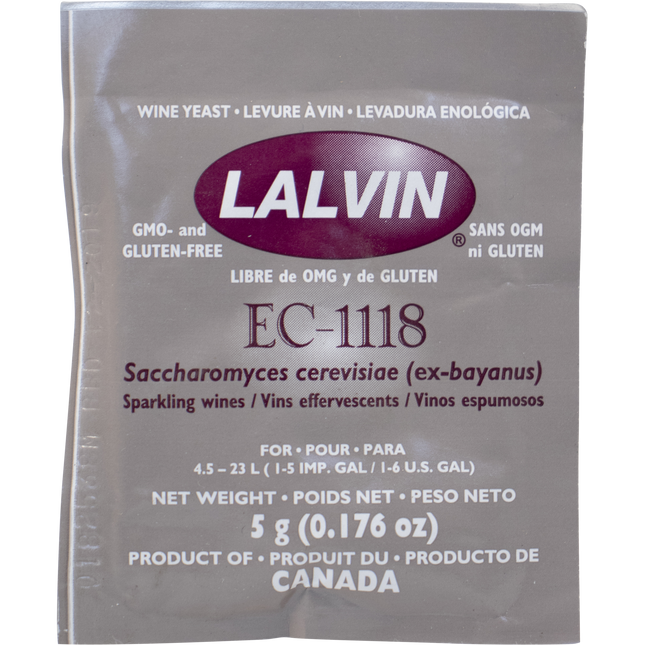
Lalvin EC-1118 (Prise de Mousse) | Dry Wine Yeast
Lalvin EC1118 is a fermentation workhorse, ideal for any application requiring strong performance, high alcohol tolerance, and minimal flavor interference Its reliability under stress makes it a staple in both home and commercial fermentations where consistency is critical Versatile, robust yeast for clean and complete fermentations Lalvin EC1118 is a highly reliable and neutral yeast strain, originally isolated from the Champagne region. Renowned for its strong fermentation kinetics and high alcohol tolerance, EC1118 is widely used in sparkling wine production, secondary fermentations, ciders, fruit wines, and distillation mashes. Its clean fermentation profile ensures the preservation of varietal and fruit character, making it a staple for winemakers seeking consistency and purity. Key Features: Alcohol Tolerance: Up to 18% v/v, suitable for high-alcohol fermentations. Fermentation Temperature Range: 10–30°C (50–86°F), allowing flexibility across various fermentation conditions. Killer Factor: Killer positive, inhibiting many wild and sensitive yeast strains, aiding in maintaining fermentation dominance. Nutrient Requirements: Low to moderate; benefits from complex nutrients in low-nitrogen musts or high-alcohol applications. Flocculation: Low to medium, resulting in compact lees and improved clarity. SO₂ Production: Low to moderate, minimizing the need for additional sulfur dioxide additions. H₂S Production: Low, reducing the risk of off-odors. Fermentation Profile & Flavor Contribution EC1118 is prized for its neutral sensory impact, producing very few esters or higher alcohols. This clean profile allows the varietal character, terroir expression, or adjunct flavors (in cider or fruit fermentations) to shine through. It is known to minimize the perception of residual sweetness due to its ability to ferment to dryness even under stressful conditions. While not typically chosen for aromatic complexity, EC1118 produces a subtle spectrum of fermentation-derived volatiles such as ethyl esters and low levels of isoamyl alcohol under certain conditions. It has low volatile acid production and is particularly good at suppressing undesirable wild microbes. Applications: Sparkling Wines & Traditional Method (Méthode Champenoise): Due to high pressure and alcohol tolerance. Stuck Fermentations: Excellent restart yeast thanks to its resilience and killer activity. Ciders: Clean fermenter that allows fruit expression and can handle cold temperatures. Fruit Wines: Neutral character supports delicate fruit aromas without masking them. Distillation Ferments: High attenuation and ethanol yield. Mead: Strong fermenter in low-nutrient environments when supplemented properly. Beer (Hybrid Styles): Occasionally used in brut-style beers or for attenuation of residual sugars in high-gravity ales. Flavor Profile: Neutral Base: Minimal sensory contribution, allowing primary ingredients to dominate. Enhanced Freshness: May enhance the perception of dryness and freshness. Clean Finish: Very low ester and fusel production, resulting in a crisp and reliable finish. Usage: Rehydration: Rehydrate in 10 times its weight of chlorine-free water at 35–40°C (95–104°F) for 15–20 minutes. Stir gently to avoid clumping. Pitch Rate: Use 0.2–0.4 grams per liter (1–1.5 grams per gallon) for optimal fermentation and flavor development. Nutrient Addition: Supplement with yeast nutrient to enhance fermentation kinetics and prevent sluggish behavior, especially in high-sugar or low-nitrogen musts. Fermentation Temperature: Maintain between 10°C and 30°C (50°F and 86°F) to optimize fermentation performance and preserve desired flavor profiles. Download the PDF Download the PDF
$1.89
-


Lallemand Opti-White| For Freshness | Mouthfeel | Oxidation Protection
A OptiWHITE – Lallemand Yeast Derivative for Freshness, Mouthfeel, and Oxidation Protection in White and Rosé Wines Protects delicate white and rosé wines from oxidation during fermentation Enhances freshness, aroma longevity, and color stability Improves mouthfeel and softness without adding bitterness Reduces the risk of browning and premature aging Outperforms generic inactivated yeasts due to its targeted composition and polysaccharide profile OptiWHITE is a specific yeast derivative developed by Lallemand through a proprietary production method that preserves functional compounds like glutathione precursors and polysaccharides. Added at the beginning of fermentation, OptiWHITE helps protect varietal aromas and prevents oxidative damage in white and rosé wines. This is especially valuable for wines with thiol or terpene-driven profiles, such as Sauvignon Blanc, Riesling, and Muscat. It contributes to a round, full palate with reduced astringency and bitterness, while preserving brightness and youthful aromas through aging. Compared to standard yeast hulls or inactivated yeast products, OptiWHITE delivers a cleaner fermentation environment with more reliable sensory impact. Protocol Add OptiWHITE directly to the juice or must at the beginning of alcoholic fermentation. Disperse in ten times its weight of clean water or must, then mix thoroughly into the tank. Best used before or during the first stages of fermentation. Do not co-add with bentonite or tannins. Usage Rates Recommended dosage: 20–40 grams per hectoliter = 0.2–0.4 grams per liter = 0.76–1.5 grams per gallon For home users a rough approximate of weight is 1 tsp = 3.4 grams
$4.49
-
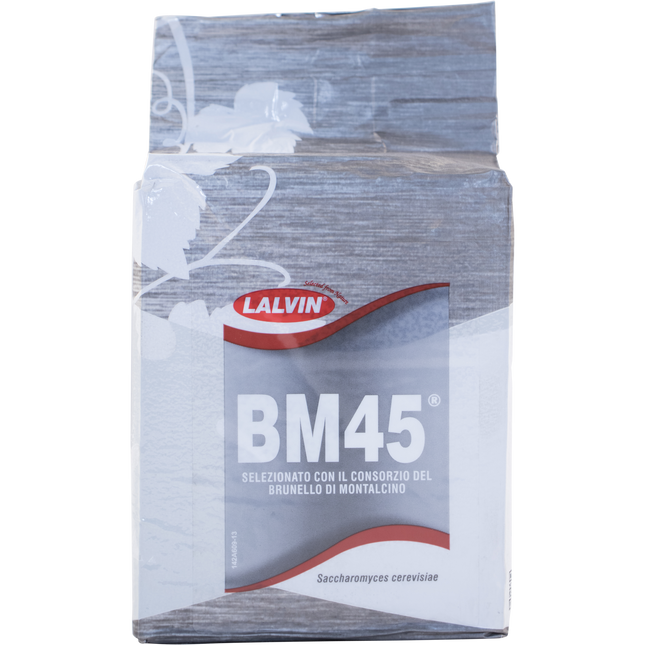
BM45 Brunello Dry Wine Yeast
Italian isolate that is recommended primarily for Sangiovese and extended maceration wines. A slow starter and moderate fermenter, BM45 has high nutritional needs and therefore should be used in conjunction with Go-Ferm (AD342) and Fermaid K (AD345) in order to minimize H2S production. BM45 contributes higher acidity, low astringency, and due to its' high levels of polysaccharide production, resultant wines have great mouthfeel and improved color stability. In addition, it can also be used to minimize vegetal characteristics that may be present in the fruit. In red wines, BM45 brings out aromas described as fruit jams, rose petals and cherry liqueur, with notes of sweet spices, licorice and cedar. While this makes it perfect for creating traditional Italian wine styles, BM45 also excels in Cabernet Sauvignon. When making white wines, some producers use this yeast on Chardonnay as a blending component to increase mouthfeel, but care for proper nutrients must be taken. It should be noted that BM45 may produce a "gamey" quality immediately post alcoholic fermentation, that will age out in about 6 months. Best results from 64 to 82 degrees F, with an alcohol tolerance up to 16%. Download the PDF Download the PDF
$3.19
-
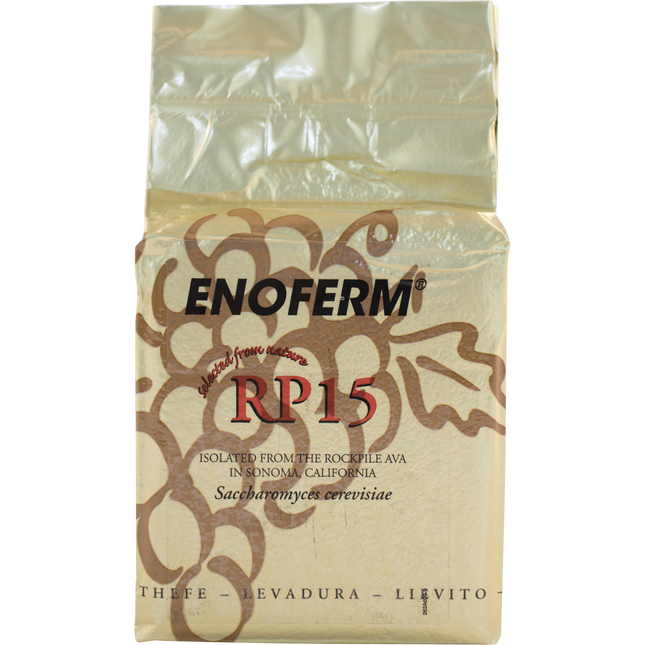
Lallemand ENOFERM RP15 Rockpile | Dry Wine Yeast
RP15 is the yeast of choice for winemakers seeking to craft powerful, fruit-driven red wines with structured tannins and bold character Whether perfecting a Cabernet Sauvignon, enhancing the richness of Zinfandel, or deepening the complexity of Syrah, RP15 consistently delivers boldness, clarity, and exceptional flavor intensity Enhanced fruit intensity and structured tannins for bold red wines RP15 is a powerful red wine yeast strain specifically selected for its ability to amplify fruit intensity while supporting structured tannin development. Ideal for crafting big, full-bodied reds, RP15 promotes deep color extraction and emphasizes rich, dark fruit aromatics. Its robust fermentation kinetics ensure complete attenuation, even in high-Brix musts, delivering wines with vibrant complexity and age-worthiness. Fruit-Driven Aromatics: Boosts expressions of blackberry, black cherry, and plum, enhancing depth and richness. Enhanced Tannin Structure: Promotes smooth, well-integrated tannins for improved mouthfeel. Alcohol Tolerance: Effective up to 16% ABV, providing stability for high-alcohol wines. Temperature Range: Performs optimally between 64°F (18°C) and 86°F (30°C), allowing for versatile fermentation conditions. Medium to High Flocculation: Contributes to clarity and stability post-fermentation. Low SO₂ Production: Minimizes sulfurous off-flavors, preserving fruit purity. Applications: Cabernet Sauvignon: Elevates boldness and structure while enhancing dark fruit notes. Zinfandel: Highlights spicy characteristics with deep berry undertones. Syrah & Petite Sirah: Enhances complexity with intense fruit and structured tannins. Merlot: Brings forward lush plum and cherry while smoothing tannins for a balanced finish. Flavor Profile: Dark Fruits: Prominent expressions of blackberry, black cherry, and plum. Spice and Earthiness: Accentuates subtle hints of black pepper, tobacco, and cedar. Smooth Tannin Integration: Balances structure with a rounded mouthfeel. Aging Potential: Supports long-term aging, improving depth and complexity over time. Guidelines: Rehydration: Rehydrate in 10 times its weight of chlorine-free water at 95°F (35°C) for 15–20 minutes. Stir gently to prevent clumping. Pitch Rate: Use 1–1.5 grams per gallon (0.25–0.4 grams per liter) for optimal fermentation and tannin extraction. Nutrient Addition: Supplement with yeast nutrients, particularly in high-Brix musts, to support strong fermentation. Fermentation Temperature: Maintain between 64°F and 86°F to maximize fruit expression and tannin development. Extended Maceration: Suitable for long maceration periods to boost color intensity and mouthfeel. Download the PDF Download the PDF
$3.19
-


Five Star | PBW Cleaner | Powdered Brewery Wash | Non-Hazardous | Alkaline Brewery Cleaner | Environmentally Friendly
PBW is a great cleaner for wine tanks, lines, pumps, etc.. It is non-hazardous buffered alkaline brewery that will often out perform more hazardous caustic chemicals without removing the flesh off your bones. Because it is not rated as a hazardous item it can ship FedEx ground, greatly reducing shipping costs. It will not corrode soft metals. PBW stands for Powder Brewery Wash, as the product was originally marketed to breweries. When mixing hot water and PBW in an air or water tight space, it will create pressure. Please use caution when using PBW in enclosed equipment.
$12.99
-

Wine Corks - 1 3/4 in Agglomerated 1+1
This is a high quality agglomerated cork with solid end caps. An agglomerated cork is a cork that is composed of many small pieces that are pressed and adhered together. As the quality of cork has declined many wineries have begun to use alternative corks, such as synthetics or these agglomerated corks to insure a good seal in their wine. These corks offer the assurance of a good seal while at the same time allowing the breathing properties that solid corks offer. Agglomerated corks work best with floor corkers as they are hard to put in with hand corkers (they do not compress as much.)
$9.99
-

Lallemand | Enoferm Beta™ | Dry Malolactic Bacteria
Enoferm Beta can positively contribute to the sensory profile of the wine, by enhancing spicy and red fruit aromas Delected due to it's good performance under difficult wine conditions and positive sensory contribution Able to induce MLF at temperatures as low as 55°F Lallemand Oenology specializes in the development, production, and marketing of top-grade yeast and bacteria Enoferm Beta is a single strain of Oenococcus oeni (ex Leuconostoc oenos), isolated from a Cabernet Sauvignon wine from Abbruzzi. It was selected due to it's good performance under difficult wine conditions, positive sensory contribution, and security from its low use of sugars and very low volatile acid as well as biogenic amines production. In winery trials, Enoferm Beta was able to induce MLF at temperatures as low as 55°F. Most direct inoculum preparations have difficulty completing MLF unless temperatures > 64°F, while Enoferm Beta can be used in wines with temperatures > 57°F. For more information about ML Bacteria, please see MoreWine!'s Guide to Malolactic Fermentation. 2.5 g: good for 66 gallons 25 g: good for 660 gallons Alcohol tolerance: <15% v/v. SO2 tolerance: <60 ppm pH: >3.2 Temperature: >57°F Different lactic acid bacteria strains do have an impact on the flavor profile of wine, Enoferm Beta can positively contribute to the sensory profile of the wine, by enhancing spicy and red fruit aromas, low diacetyl production, better structure and body,and less astringency and bitterness. You can't store malolactic bacteria once the package has been opened. Note: Malolactic bacteria added during the ferment will compete with the yeast for nutrients and are atagonistic to yeast, potentially resulting in higher VA levels. The best time to add an ML culture is after racking off the gross lees.
$39.99
-
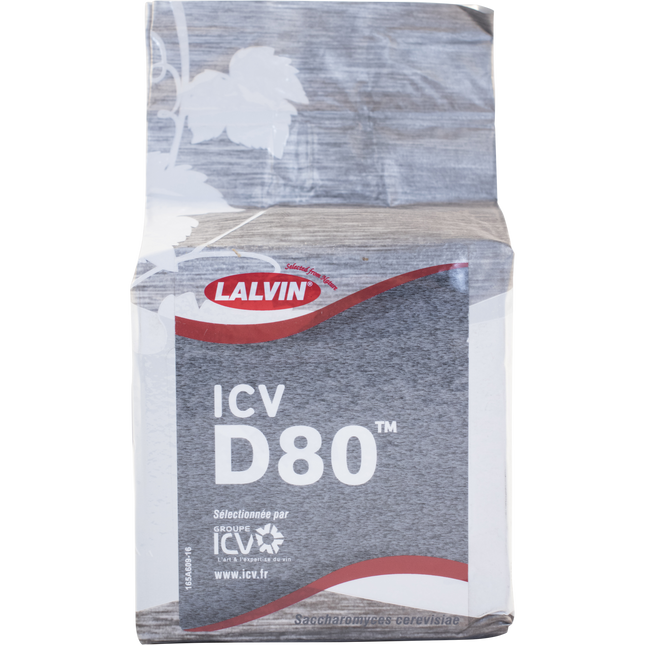
D80 Dry Wine Yeast
ICV-D80 was isolated by Dominique Delteil of the ICV in 1992 from the Cote Rotie area of the Rhone Valley. In addition to its' ability to enhance tannin structure, it's know for being able to ferment musts high in sugar and polyphenols. With proper nutrition, aeration and fermentation temperatures below 82 degrees F, ICV-D80 will ferment up to 16% alcohol. ICV-D80 brings high fore-mouth volume, big mid-palate mouthfeel and intense fine grain tannin to reds. It is one of the best strains for contributing big tannin volume in a blend. ICV-D80 is characterized by concentrated, dark fruit, smoke and a licorice finish. When blended with wines fermented with ICV-D254 or Syrah, wines fermented with ICV-D80 bring more tannin intensity to the blend. In short, this yeast is truly great for the structural support it can bring to a wine. However, if the winemaker is looking for highlighted fruit and ethereal top-notes as well, it often may not be the best choice when using a single strain in the vintage. Therefore, it may help to think of it as usually needing a companion strain to help bring everything to a finished wine. Download the PDF Download the PDF
$3.19
-
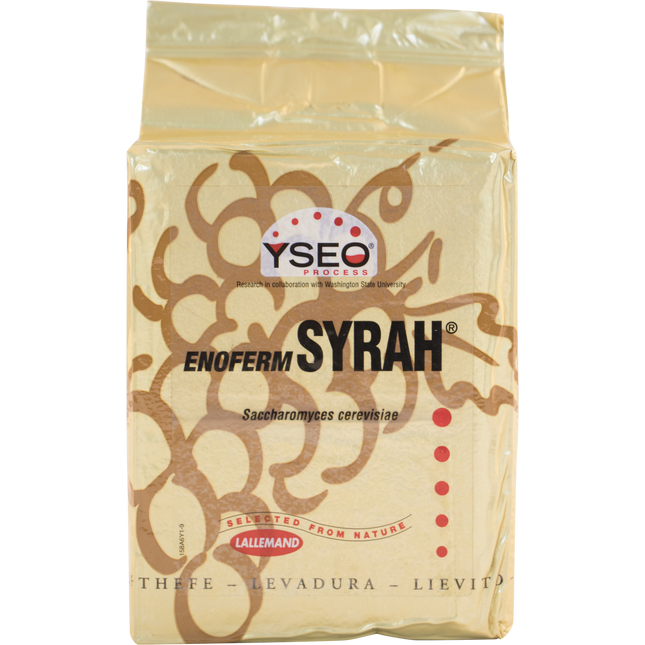
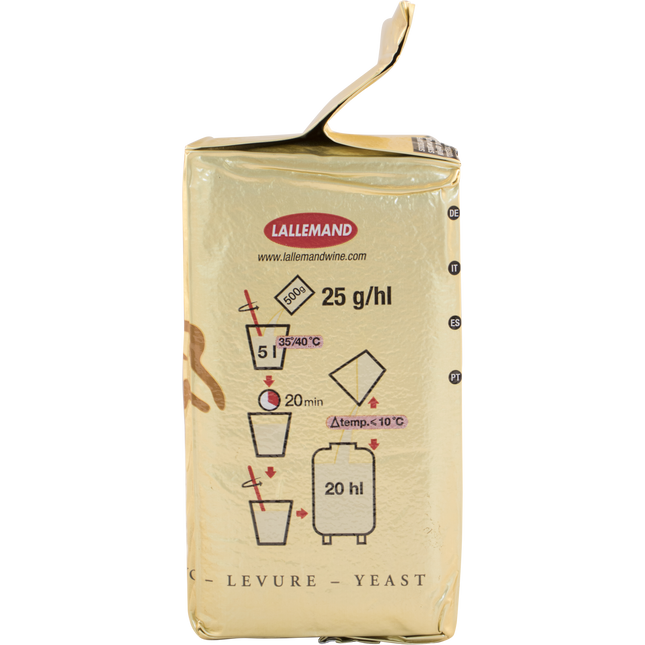
Lallemand ENOFERM Syrah™ | Dry Wine Yeast
Syrah is the perfect choice for winemakers aiming to craft powerful, structured red wines with bold fruit expression and deep color stability Whether perfecting a Syrah/Shiraz, boosting the intensity of Cabernet Sauvignon, or refining a GSM blend, Syrah Yeast delivers exceptional flavor, structure, and age-worthiness in every batch Bold structure and intense aromatics for rich, full-bodied reds Syrah is a specialized wine yeast strain meticulously selected to bring out the bold structure and vibrant aromatics characteristic of Syrah and other robust red wines. Renowned for its ability to enhance color stability, deepen tannin integration, and highlight dark fruit notes, Syrah Yeast is the ideal choice for crafting powerful, age-worthy wines. Its controlled fermentation kinetics ensure balanced attenuation, minimizing off-flavors while preserving the wine’s natural complexity. Enhanced Color Stability: Promotes deep anthocyanin extraction for rich, lasting color. Tannin Development: Integrates structured tannins for a smooth, full-bodied mouthfeel. Alcohol Tolerance: Effective up to 16% ABV, supporting the creation of high-alcohol red wines. Temperature Range: Optimally ferments between 64°F (18°C) and 86°F (30°C), allowing for full expression of bold flavors. High Flocculation: Contributes to clarity and stability post-fermentation. Low SO₂ Production: Preserves fruit purity and aromatic intensity. Applications Syrah/Shiraz: Elevates bold black fruit flavors, peppery spice, and deep color. Cabernet Sauvignon: Enhances structure and tannin integration for age-worthy complexity. Grenache: Promotes ripe berry notes with smooth tannins. Malbec: Boosts dark fruit intensity and earthy undertones. Blended Reds: Perfect for GSM (Grenache, Syrah, Mourvèdre) blends, enhancing body and color. Flavor Profile Dark Fruits: Prominent expressions of blackberry, plum, and dark cherry. Spice and Earthiness: Accentuates hints of black pepper, leather, and subtle tobacco. Full-Bodied Mouthfeel: Enhances the structure and richness of the wine. Aging Potential: Supports long-term aging, improving depth and complexity with time. Usage Rehydration: Rehydrate in 10 times its weight of chlorine-free water at 95°F (35°C) for 15–20 minutes. Stir gently to prevent clumping. Pitch Rate: Use 1–1.5 grams per gallon (0.25–0.4 grams per liter) for optimal fermentation and tannin development. Nutrient Addition: Supplement with yeast nutrients, particularly in high-sugar musts, to ensure complete fermentation. Fermentation Temperature: Maintain between 64°F and 86°F for optimal color extraction and structured tannin formation. Extended Maceration: Ideal for long fermentations to deepen color and enhance tannin complexity. Download the PDF Download the PDF
$3.19
-

Heat Shrink Sleeves - Matte Black
These PVC heat shrink capsules help to make your home made wine look classy and professional. The look is the closest we have seen to commercially used tin capsules, which must be spun on with a $2,000 machine. Conversely, these PVC capsules can be easily used at home. Features horizontal tear tab. To use, slide on to top of wine bottle and dip into hot water for a quick and even shrink. Or for faster processing with a more reliable finish try one of our Heat Shrink tools. 2 1/4" Height x 1 1/4" Diameter.
$1.79
-
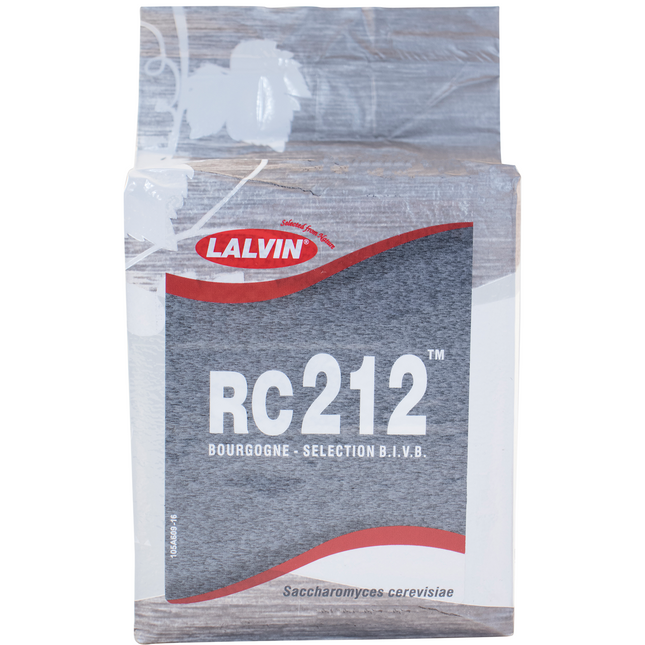
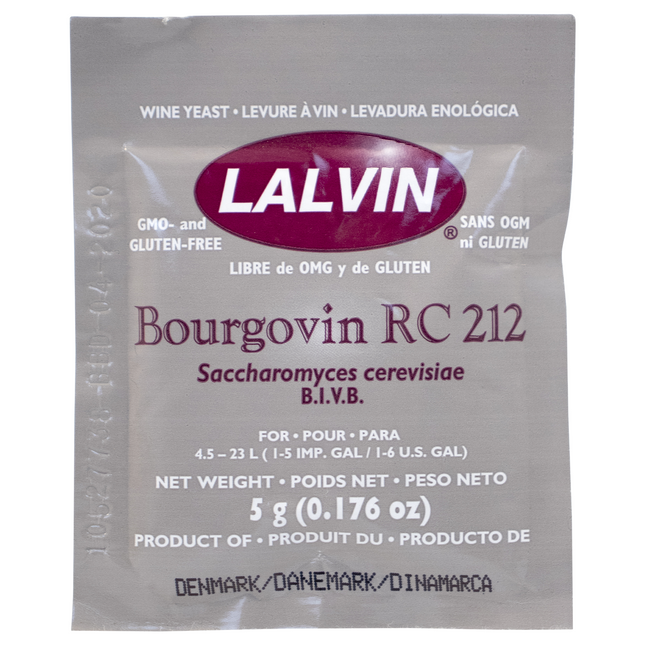
Lalvin RC 212 | Dry Wine Yeast
Lalvin RC212 is the premier choice for winemakers looking to produce structured, full-bodied red wines with exceptional color and aromatic depth Whether perfecting a classic Burgundy-style Pinot Noir, crafting a bold Merlot, or refining a smooth Gamay, RC212 consistently delivers elegance, balance, and rich complexity Provides enhanced structure and color in Pinot Noir Lalvin RC212 is a renowned wine yeast strain, originally selected from the Burgundy region of France by the Bureau Interprofessionnel des Vins de Bourgogne (BIVB). It is specifically chosen for its ability to enhance color stability, tannin structure, and aromatic complexity in red wines, particularly Pinot Noir. RC212 promotes the development of ripe berry, bright fruit, and spicy characteristics, making it ideal for crafting robust, age-worthy red wines. Enhanced Color Stability: RC212 promotes deep anthocyanin extraction and color intensity in red wines, protecting color due to low absorbance rates onto yeast cell walls. Rich Tannin Structure: Supports smooth, well-integrated tannins that age gracefully. Alcohol Tolerance: Effective up to 16% ABV, allowing for complete fermentation in high-sugar musts. Attenuation Rate: Typically achieves 85–90% attenuation, ensuring a full, structured finish. Temperature Range: Performs optimally between 64°F (18°C) and 86°F (30°C), perfect for developing rich, full-bodied reds. Medium Flocculation: Settles well post-fermentation, contributing to clarity and stability. Applications: Pinot Noir: Perfectly suited for Burgundy-style Pinot Noir, enhancing its delicate fruit and silky tannins. Merlot & Cabernet Franc: Boosts structure and body, delivering rich fruit and spice. Gamay: Highlights fresh berry notes while enhancing tannin integration. Blended Reds: Suitable for Bordeaux blends and GSM (Grenache, Syrah, Mourvèdre), bringing forward lush fruit and balance. Flavor Profile: Dark Fruits: Prominent expressions of black cherry, plum, and raspberry. Spice & Earthiness: Subtle hints of cinnamon, clove, and forest floor. Silky Mouthfeel: Enhances the smoothness and roundness of the palate. Aging Potential: Promotes tannin development for wines that improve with time. Usage: Rehydration: Rehydrate in 10 times its weight of chlorine-free water at 95°F (35°C) for 15–20 minutes. Stir gently to prevent clumping. Pitch Rate: Use 1–1.5 grams per gallon (0.25–0.4 grams per liter) for optimal fermentation and color development. Nutrient Addition: Supplement with yeast nutrient to optimize fermentation strength, particularly in high-Brix musts. Fermentation Temperature: Maintain between 64°F and 86°F to optimize color extraction and tannin structure. Extended Maceration: Ideal for long maceration periods to deepen color and enhance tannin complexity. Download the PDF Download the PDF
$1.79
-
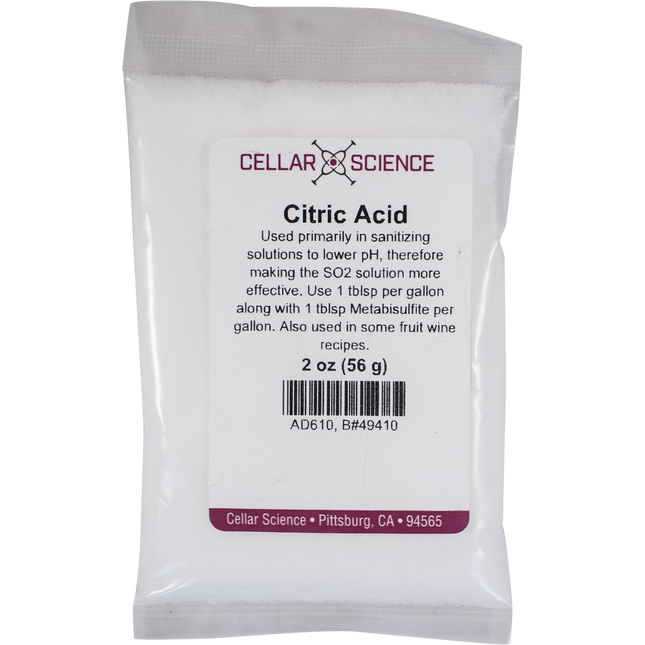
Citric Acid
Used primarily in sanitizing solutions to lower pH, therefore making the SO2 solution more effective. Use 1 tbsp per gallon along with 1 tbsp meta per gallon. Citric is not added directly to must prior to either primary or ml fermentation as its metabolism can lead to volatile acidity. A rough approximate of weight is 1 tsp = 4 grams. We highly recommend using a scale to weigh the product for an accurate dose. We do not recommend relying on these rough conversions for accurate dosage rates. Domestically produced in the USA.
$2.99
-
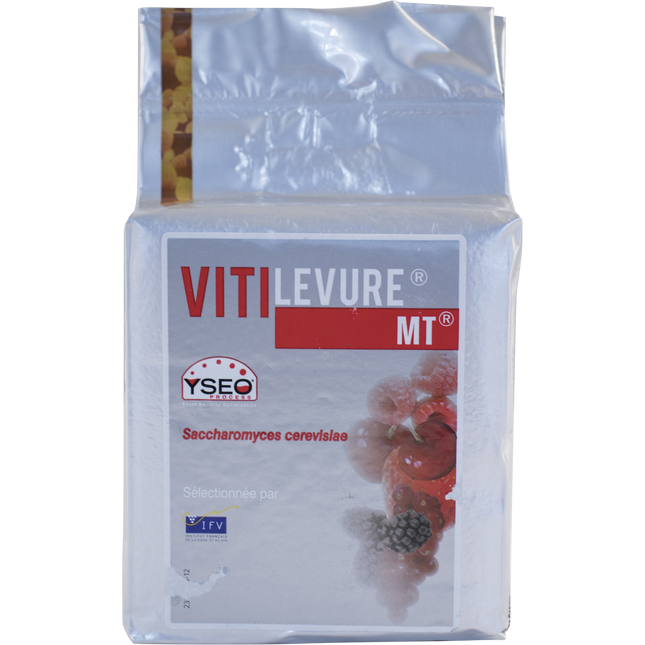
MT Dry Wine Yeast
MT was selected in Saint Emilion by the ITV Bordeaux and Martin Vialatte Oenologie in collaboration with the INRA Montpellier for its' ability to enhance varietal fruit and floral aromas, along with strawberry jam, caramel, and spice notes. Although highly recommended for Merlot and Cabernet Sauvignon, MT also does well in most red programs where a "soft, fresh bowl of berries" element is needed/desired either by itself or as part of a blend. Wines made with MT show good colour stability along with enhanced tannic structure and rich mouthfeel, making MT an ideal compliment to winemaking styles destined for aging. Although MT's fermentation kinetics are steady and its' alcohol tolerance is fairly high, it will still benefit from a balanced nutrient strategy, especially in musts with low available nitrogen and a high potential alcohol. Best results from 59 to 90 degrees F, with an alcohol tolerance to 15%. Download the PDF Download the PDF
$3.39
-
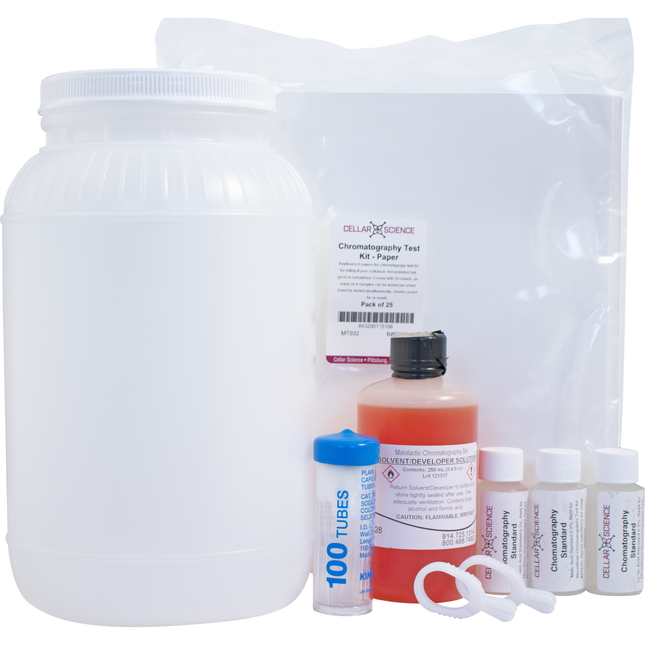
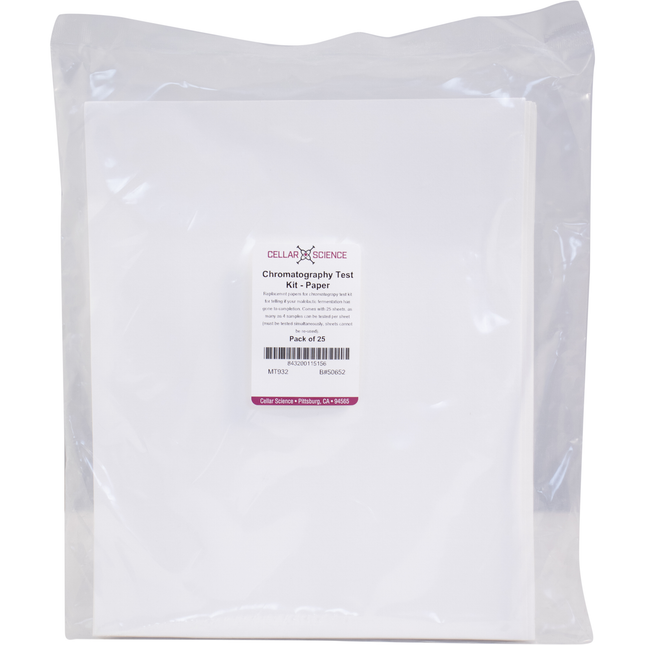
CellarScience® Chromatography Test Kit
Due to high demand, this item is currently out of stock. Be the first to receive your items by placing a pre-order today. We will automatically ship this to you when we receive more inventory. How do you tell if your malolactic fermentation is done? With our Paper Chromatograpy test kit! Use it to tell if your malolactic fermentation has completed and you can move to the next step. This information is essential knowledge for doing SO2 additions, cold stabilization, acid additions, etc on wines that have been innoculated with an ML strain or allowed to undergo natural malolactic fermentation. You always want to know if ML has completed before bottling because if a wine is bottled with an incomplete Malolactic Fermentation it runs a high risk of completing it in the bottle which will ruin the wine. Comes with 25 sheets, as many as 4 samples can be tested per sheet (must be tested simultaneously, sheets cannot be re-used).
$99.99
-

Stavin French Oak Cubes | Medium Toast
Due to high demand, 20 lb is currently out of stock. Be the first to receive your items by placing a pre-order today. We will automatically ship this to you when we receive more inventory. Cubes have a longer contact time than traditional chips do, which make them better for long-term aging of wines and beers. Also, longer contact time means longer extraction of flavors (3-6 months), which leads to a more complex combination of flavors. Chips are usually done giving flavor after a week, thereby contributing a harsh, flat oak flavor. Our cubes are fire toasted and cut by Stavin, a leading supplier of high-quality oak alternatives to top commercial wineries.
$9.99
-
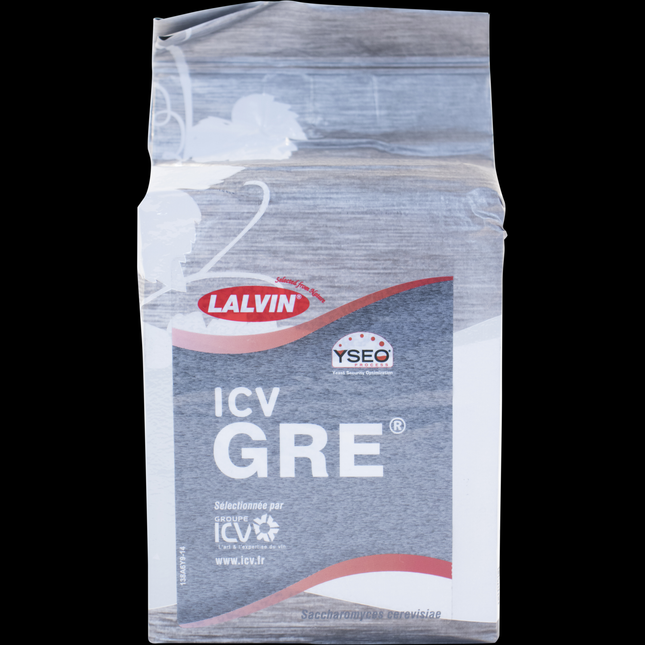
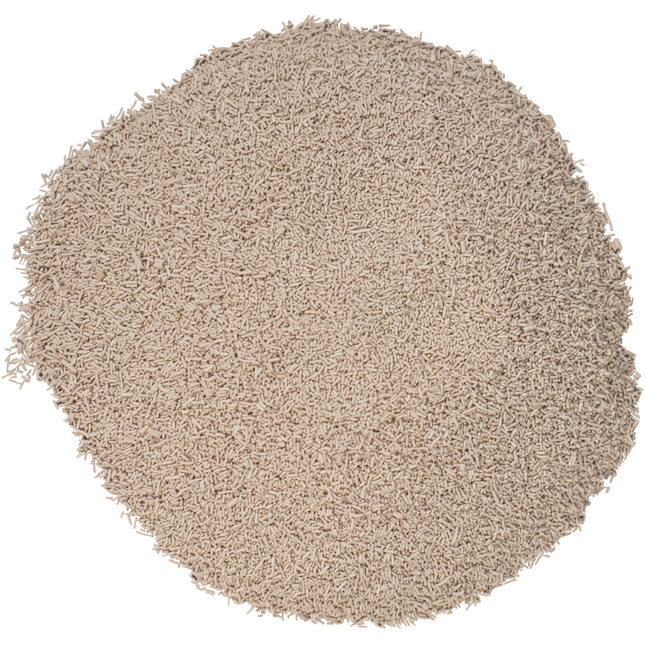
GRE Dry Wine Yeast
For easy-to-drink Rhone style wines. This versatile strain is suitable for reds, roses and whites. In red wines, it contributes up front fruit to easy-to-drink Rhone style wines, often with a nice spicy quality if present in the fruit. ICV-GRE can also be effectively used with short skin contact regimes (3 to 5 days) to reduce vegetal and undesirable sulfur components in varietals like Merlot, Cabernet, Grenache and Syrah. In addition to bringing fresh, ripe fruit qualities, ICV-GRE also helps to enhance the mouthfeel of a wine. While it may not be a powerhouse in itself, this yeast truly excels at being able to keep a red wine blend from potentially becoming too heavy and pedestrian. When used in fruit focused whites like Chenin blanc, Riesling, and Viognier, ICV-GRE results in stable fresh fruit characteristics and delivers a big fore-mouth impact. Alcohol tolerant to 15%, best results from 59 to 82 degrees F. Download the PDF Download the PDF
$2.99
-
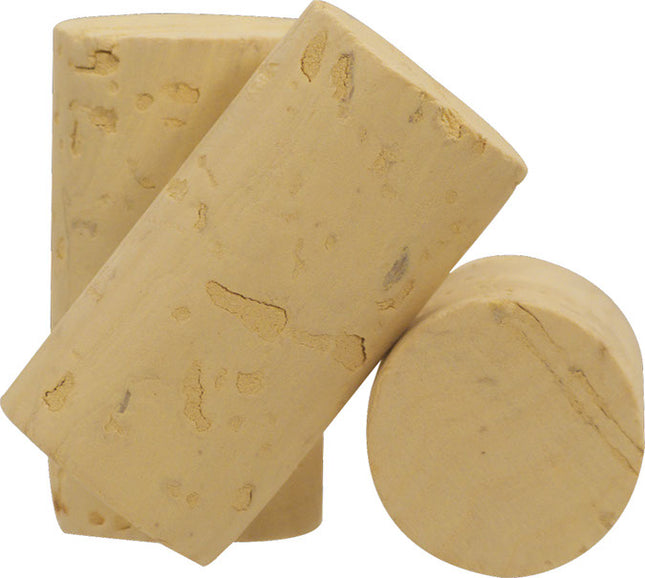
Wine Corks - 1 3/4 in. Acquamark Corks
The Acquamark cork line is a high quality colmated cork. These corks have the ageable lifespan of Natural Cork, but are closer to the price of an agglomerated or overrun cork. Colmated corks are Natural Corks that were not quite flawless enough to make a grade, but are then filled in with agglomerated pieces, resulting in an ageable, but economical cork. Dimensions: 45mm x 24mm
$7.49
-
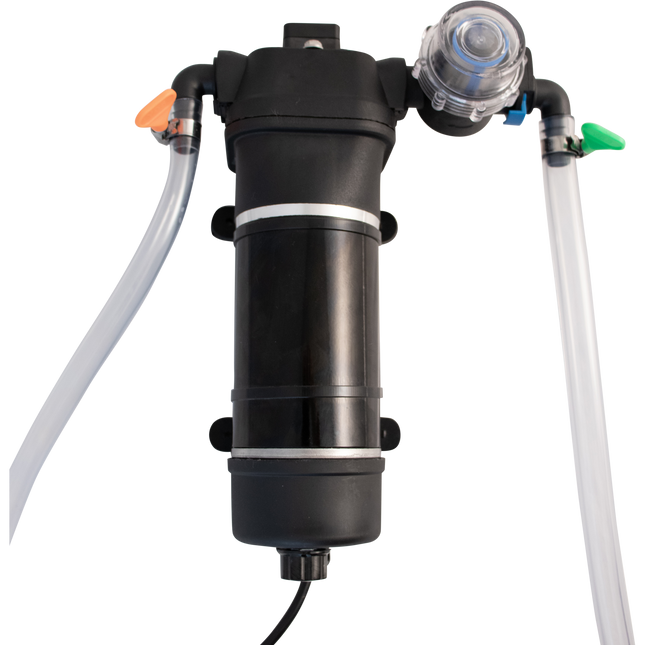

The Vintage Shop | Super Transfer Pump | Variable Speed Diaphragm Pump | 0-3 GPM | Self-Priming | Quick Disconnect Pre-Filter | Tubing Included
When siphoning is impractical or too time consuming, the home winemaker needs a pump. We helped pioneer the use of diaphragm pumps as an economical, gentle method to move small volumes of wine. This new take on an old favorite includes speed control. Now you can dial in the flow from 0 to 3 gallons per minute. Gentle, economical, flexible, and wow are all adjectives we would use to describe the performance. When this pump was first introduced to us, we loved the idea, but had concerns that the speed control would compromise the longevity of the motor. We build much larger pumps (our ChunkyPumps for commercial wineries) and normally you need a $700 frequency drive to control motor speed. However, we kept in touch with the manufacturer and after three years in which he has not had any issues, and after our own testing, we are now sold that this pump performs as promised. The manufacturer offer a 1 year warranty. A diaphragm pump works by moving wine through one pulsating diaphragm into the next. In this design, as opposed to a centrifugal pump which has a small head spinning at high speeds, the shear value is small meaning the wine is not as "beat up". A diaphragm pump is self-priming, meaning that it will "pump air" creating suction that will pull liquid out of your container and into the pump head. This makes the pump very easy to use for the home winemaker. This pump comes with 1/2" barbed ports for easy connectivity. Comes with 4' tubing on both sides. 110 Volts, 0.5 Amp, 60 Hz. Includes a built-in pre filter to help prevent solid materials from entering the pump head and potentially damaging the diaphragms, which would prevent the pump from being able to move liquid. The clear plastic top of the pre filter unscrews for cleaning.
$249.99
-
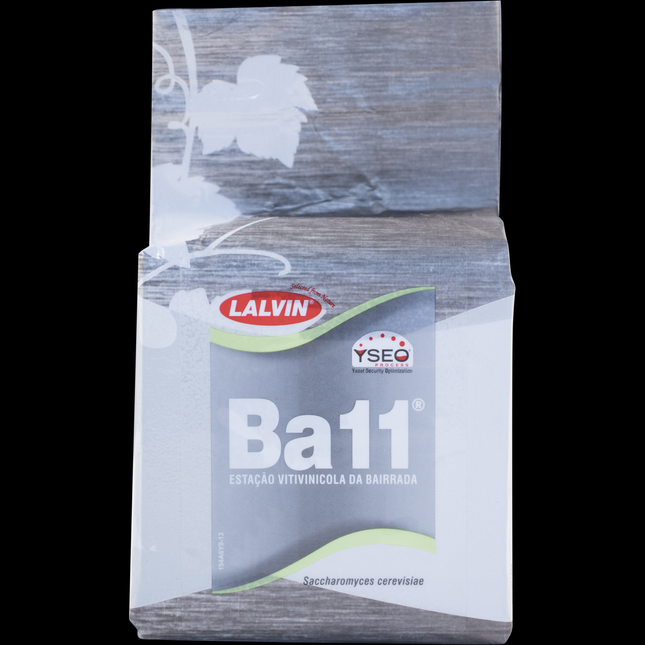
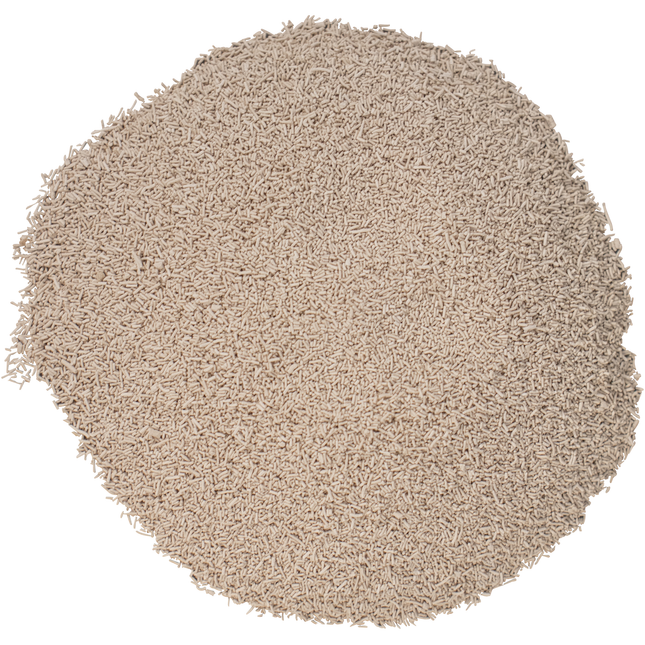
BA-11 Dry Wine Yeast
BA1 was selected in 1997 near Estacao Vitivinicola de Barraida in Portugal. It has excellent fermentation kinetics, even at low temperatures. It promotes clean, aromatic, estery characteristics during fermentation. BA1 intensifies mouthfeel and augments lingering flavors in both still and sparkling white wines. BA1 encourages the fresh fruit aromas of orange blossom, pineapple and apricot. In relatively neutral white varieties BA1 brings out tropical fruit, cream, vanilla and spice. With fruit from hot climates, BA1 can really help to "flesh out" a wine by its' volume and mouthfeel enhancement. This strain is good by itself, as well as being a great structural component to a blend. Best results from 50 to 77 degrees F, and alcohol tolerant to 16%. Download the PDF Download the PDF
$3.19
-
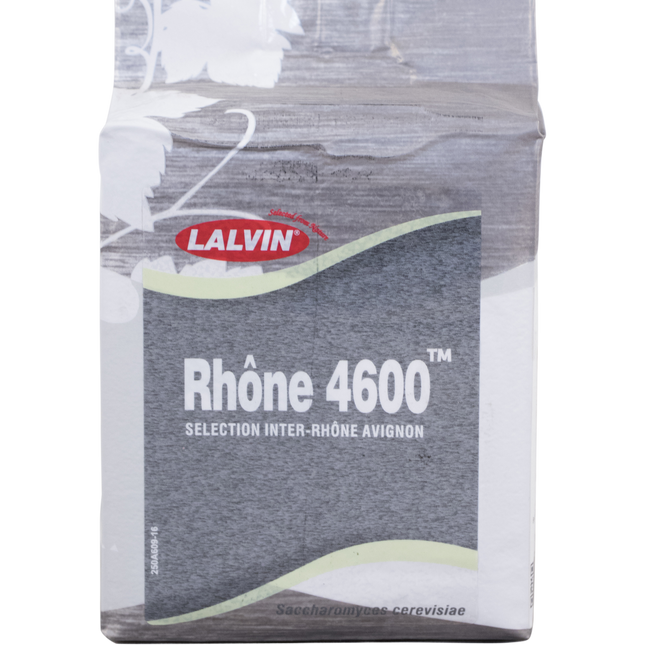
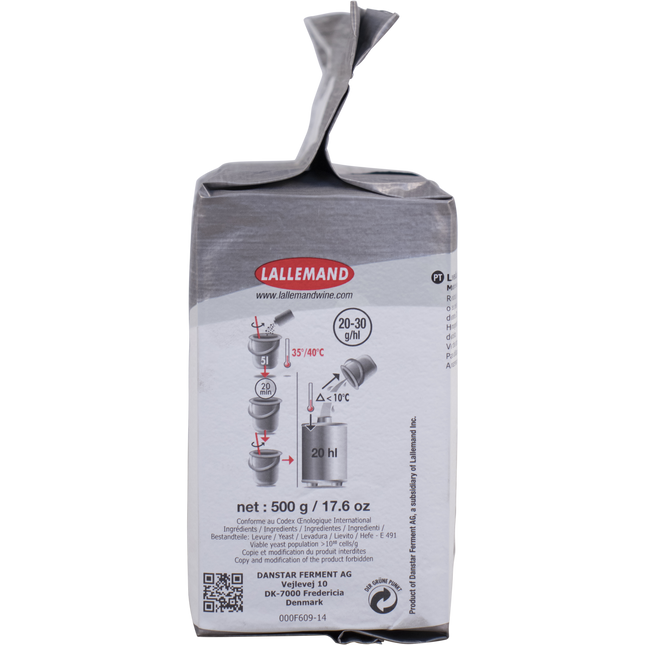
Rhone 4600 Dry Wine Yeast
Rhone 4600 is a Cote du Rhone isolate that has a short lag phase, low nutrient demand, and has the ability to ferment well at low temperatures. Due to its' high level of polysaccharide production, Rhone 4600 contributes intense mouthfeel and volume to a finished wine. In addition, Rhone 4600 helps create complex aromatic notes along with a high degree of ester production. In whites like Viognier, Marsanne, Roussane, and Chardonnay there is an emphases on pineapple, pear, and apple. When used in Roses made from Mouvedre, Grenache and Syrah, intense, elegant, fresh strawberry becomes the focus. While Rhone 4600 is good for white wine production, it is an excellent yeast for making Roses either by itself or as part of a blend. Best results from 56 to 72 degrees F, with an alcohol tolerance to 15%. Download the PDF Download the PDF
$2.99
-
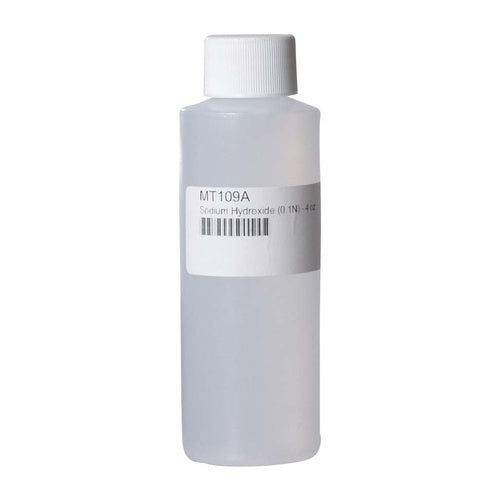
Sodium Hydroxide (0.1 N)
Replacement Sodium Hydroxide for the CellarScience® Acid Test Kit (W501CS) or any other acid test kit which uses 0.1N Sodium Hydroxide. Please Note: This Sodium Hydroxide is 10x stronger than the MT110 product that is used with our MT140 Aeration Oxidation SO2 Test Kit. They are not interchangeable.
$5.59
-
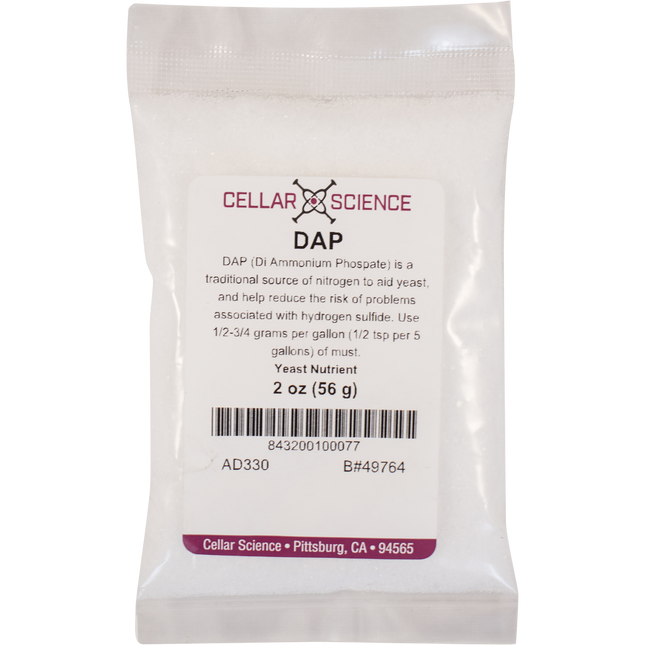
Yeast Nutrient - Diammonium Phosphate (DAP)
Due to high demand, the 50 lb is currently out of stock. Be the first to receive your items by placing a pre-order today. We will automatically ship this to you when we receive more inventory. Diammonium Phosphate (DAP). A source of nitrogen for yeast. Use .5 - .75 grams per gallon (1/2 tsp per 5 gallons) of must to aid yeast and help reduce later problems with hydrogen sulfide. There is a superior nutrient regimen (using Go-Ferm and Fermaid K) for wine making: Download the PDF A rough approximate of weight is 1 tsp = 3.1 grams. We highly recommend using a scale to weigh the product for an accurate dose. We do not recommend relying on these rough conversions for accurate dosage rates.
$4.99
-
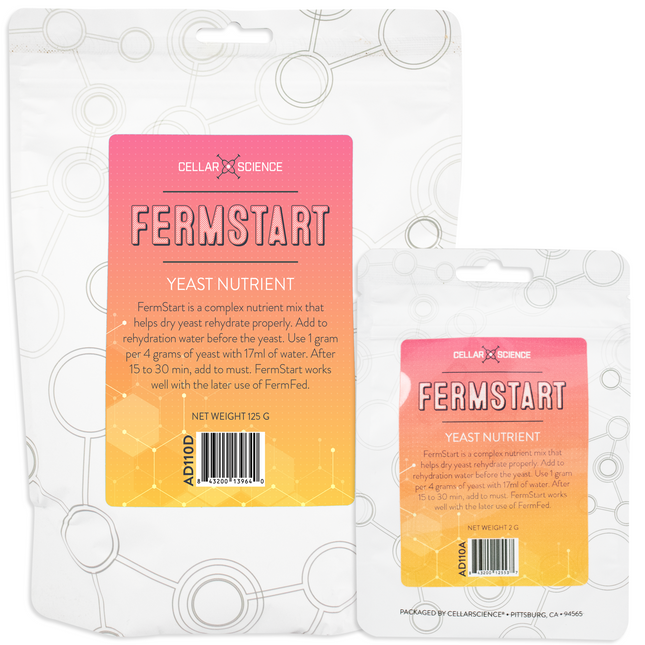
CellarScience® FermStart | Yeast Rehydration Nutrient
Start your fermentation right with FermStart by CellarScience®. FermStart is a concentrated, micronutrient blend that helps yeast during the critical phase in which they transition from dried and dormant back into healthy and active. FermStart is added to your rehydration water so that your yeast absorbs the nutrients as they absorb the water. Rehydrating with FermStart prior to pitching your yeast also has the added benefit of allowing the yeast access to the nutrients before wild yeast in the must can uptake them. Rehydrating with FermStart = Healthy Yeast Rehydrating your yeast is always recommended but is considered especially important at any Brix level above 14. Rehydrating with FermStart is the gold level of hydration and helps protect your yeast against initial osmotic pressures, competition from wild yeast, and alcohol toxicity. Proper hydration and healthy yeast have also shown to have a positive impact on flavor. How Much? FermStart is a super concentrated formula, which is very convenient when you are rehydrating large amounts of yeast. Use 1 gram of FermStart for every 4 grams of yeast. We offer some suggested ranges for the amount of water to use below. Examples: 8g yeast – Add 2g FermStart to 30-50ml of water 80g yeast – Add 20g FermStart to 300-400ml of water 500g yeast – Add 125g FermStart to 1500-2000ml of water The Science of How it Works FermStart is rich in readily assimilable amino acids, sterols, vitamins, and natural glutathione. Readily assimilable means that the size of the molecules present in FermStart are all extremely small and easily absorbed by the yeast cell. This is obtained by centrifuge and allows FermStart to be extremely concentrated and not contain filler. The availability of readily assimilable amino acids allows the yeast cell to skip the step in which amino acids would be synthesized within the cell. This saved energy is instead directed into multiplication. Faster yeast cell multiplication means a faster fermentation start, allowing your yeast to out-compete wild yeast. Wild yeast have unknown flavors and fermentation behavior, so it is important to give your selected yeast the best chance to dominate the fermentation. Sterols help the cell membrane regain and maintain elasticity helping to ensure a perfect start and continued performance throughout the fermentation. The strong cell membrane helps ensure that the yeast can survive and complete alcoholic fermentation under tough conditions. Glutathione is a very special natural antioxidant and detoxifier made up of three amino acids – cysteine, glutamate, and glycine. It is extremely important for maintaining intracellular health by preventing damage to cellular components during the very oxidative process of rehydration. FermStart does not contain nitrogen which is detrimental to the yeast cell during hydration. Nitrogen can be added through the addition of FermFed or FermFed DAP free nutrients at the first signs of fermentation. Another addition is then added at 1/3 sugar depletion to complete a total fermentation nutrient schedule. For a full yeast nutritional plan, use FermStart when rehydrating your yeast, FermFed DAP Free at the onset of fermentation, and FermFed after 1/3 sugar depletion.
$1.59
-


Lallzyme C-Max |
Enhances clarification and static settling of white and rosé musts under extreme conditions Active and fast depectinisation at low temperature, low pH, or high total pectin content Produces rapid, compact lees and improves juice quality consistently Requires lower dosage for effective results compared to standard enzymes Cinnamyl-esterase-free pectinase blend minimizes ethylphenol precursor release Lallzyme C-MAX™ is a micro-granulated pectolytic enzyme derived from Aspergillus niger, formulated for use in white and rosé wine production where settling conditions may be difficult. With high activities of pectin lyase, pectin methyl esterase, and polygalacturonase, it provides fast, efficient breakdown of pectin, even at low temperatures (as low as 8 °C / 46 °F) or low pH. Its action reduces must viscosity, speeds up clarification, and generates compact, easy-to-rack lees. Because it contains no cinnamyl esterase, Lallzyme C-MAX™ also limits the formation of ethylphenol precursors, contributing to cleaner, more varietally expressive wines. Protocol for Use: Add after pressing or directly into the settling tank. Dilute the enzyme in 10 times its weight in water or juice before use. Mix thoroughly for uniform distribution. Do not add bentonite during enzyme treatment. Clarification typically completes within 24 hours depending on temperature and juice conditions. Usage Rates: Standard conditions (>12 °C / 54 °F): 0.5–1.0 g/hL = 0.005–0.01 g/L = 0.019–0.038 g/gal Cold or high-pectin conditions (8–12 °C / 46–54 °F): 1.0–2.0 g/hL = 0.01–0.02 g/L = 0.038–0.076 g/gal Store in original sealed packaging at 5–15 °C (41–59 °F) in a dry place. Suitable for organic and vegan wine production.
$2.89
-

Tannin Complex
This product replaces our TAN130 - Tan'Cor Enological tannins offer the winemaker the possibility to add refined, highly-bindable tannin to your wine at any stage during the process. Benefits can include increased structure and mouthfeel, color stabilization, stability, anti-oxidative qualities, and overall complexity. Tannins can reduce vegetal/herbaceous characteristics and perceived astringency. We offer four types of oenolgical tannins, two for use during fermentation, and two for use during the aging phase. Aging tannins Tannin Complex is a tannin that is added post fermentation to improve the overall structure and to help protect the wine from oxidation during aging. It is composed of proanthocyanidins and ellagic tannins that integrate easily into young wines. Tannin Complex was specially developed to add structure and a soft mid palate to premium red wines without harshness or a forward oak finish. It can also enhance the varietal fruit character while adding complexity to the finish. Helps stabilize wines by improving the polyphenolic composition. It is especially useful when aging wines in older tannin-leached barrels and with full, fruity, lower tannin varietals like Syrah and Zinfandel. To Use: While racking or stirring, add Tannin Complex to the wine incrementally. Mix well to ensure homogeneity. Final addition should be made 3-6 weeks before bottling to allow for complete polymerization and settling. Use at the rate of 0.20-1.14 g/gal (5-30 g/hL) prior to aging. A rough approximate of weight is 1 tsp = 3.1 grams. We highly recommend using a scale to weigh the product for an accurate dose. We do not recommend relying on these rough conversions for accurate dosage rates.
$1.99
-
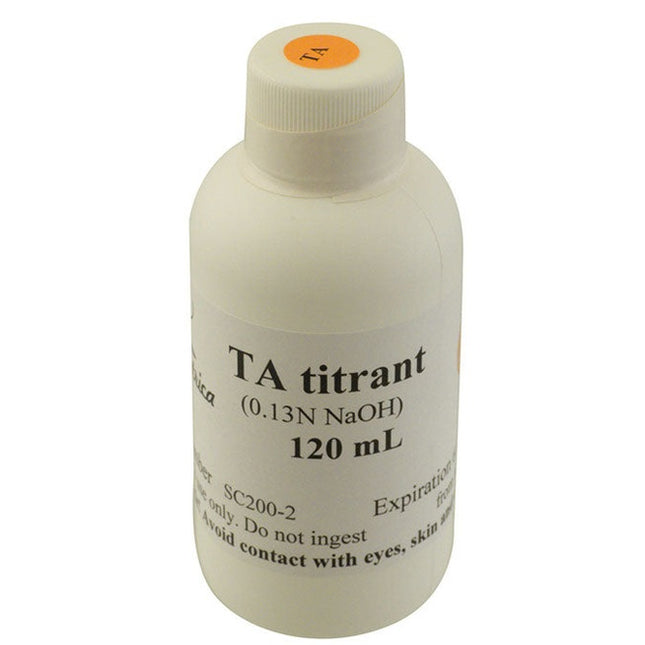
TA Titrant for MT565 & MT570 - 130mL (0.13N Sodium Hydroxide)
This reagent bottle replenishes the TA titrant (0.133N NaOH) found in the SC-200 and the SC-300 Analyzer kits. To avoid cross-contamination with other reagents, use a dedicated syringe to dispense the NaOH reagent. Store reagents in a dark, cool place with the bottle tightly sealed to maximize shelf life. Good for about 12 tests. Guaranteed for 6 months. To avoid cross-contamination with other reagents & solutions, use a dedicated pipette or pour the TA titrant into another container. Store solution in a dark, cool place with the bottle tightly sealed to maximize shelf life. Please note: some bottles of TA Titrant may show 100mL as the volume. This is a misprint. The true volume is 130mL.
$20.00
-

Heat Shrink Sleeves - Matte Burgundy
Due to high demand, some of these items are currently out of stock but available for pre-order. Please check status notes below when selecting a size option to see if it is In Stock or tagged as PreBook. We will automatically ship this to you when we receive more inventory. These PVC heat shrink capsules help to make your home made wine look classy and professional. The look is the closest we have seen to commercially used tin capsules, which must be spun on with a $2,000 machine. Conversely, these PVC capsules can be easily used at home. Features horizontal tear tab. To use, slide on to top of wine bottle and dip into hot water for a quick and even shrink. Or for faster processing with a more reliable finish try one of our Heat Shrink tools. 2 1/4" Height x 1 1/4" Diameter.
$1.79
-

French Oak Chips | Medium Toast
Add the “aged in oak” flavor to your wine without the oak barrel! Our high quality, yet inexpensive French oak chips come from a local cooper in Napa, California. Medium Toast.
$2.99
-

Heat Shrink Sleeves - Gold
These PVC heat shrink capsules help to make your home made wine look classy and professional. The look is the closest we have seen to commercially used tin capsules, which must be spun on with a $2,000 machine. Conversely, these PVC capsules can be easily used at home. Features horizontal tear tab. To use, slide on to top of wine bottle and dip into hot water for a quick and even shrink. Or for faster processing with a more reliable finish try one of our Heat Shrink tools. 2 1/4" Height x 1 1/4" Diameter.
$1.79


You have seen 48 out of 4028 products